


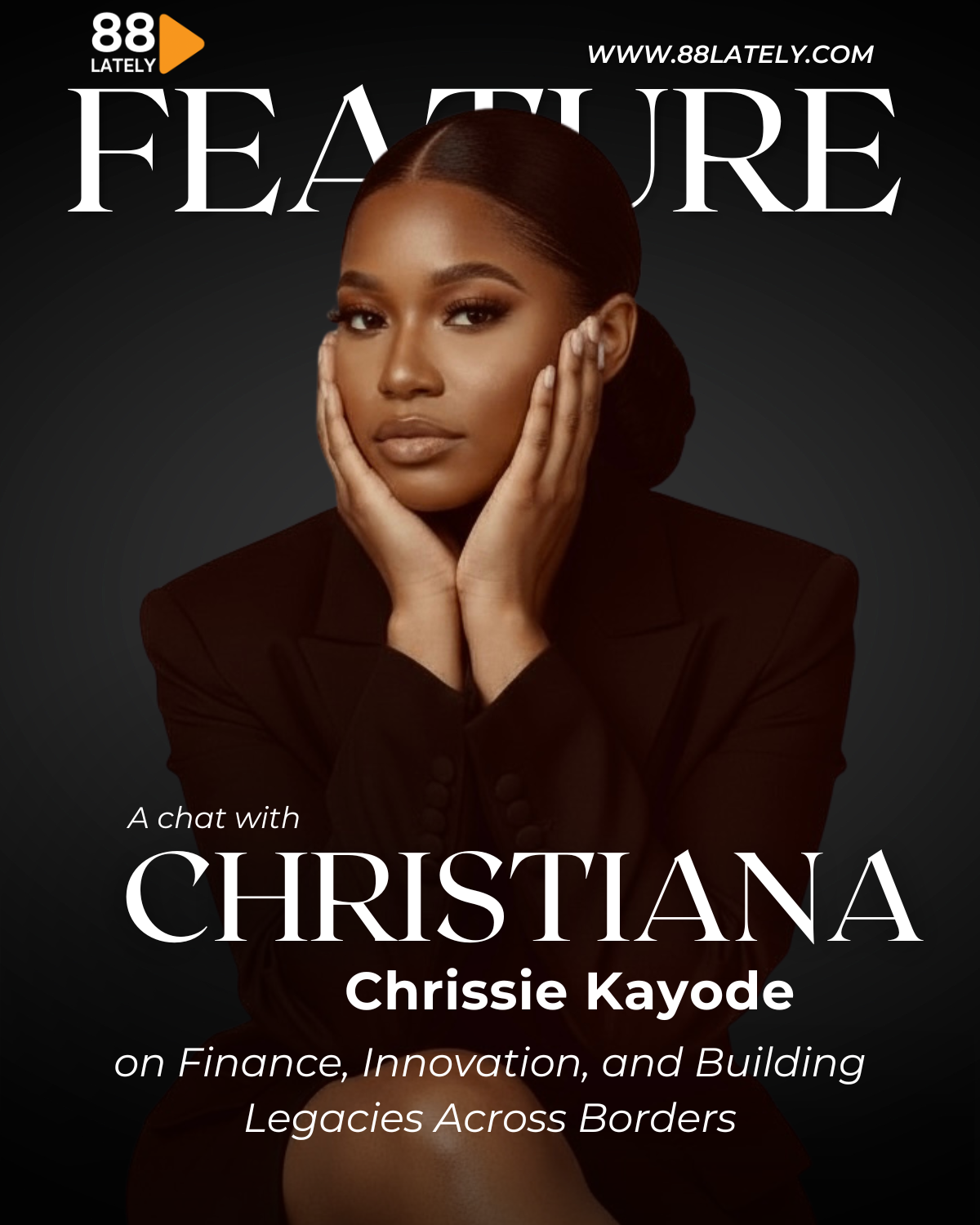
Christiana “Chrissie” Kayode is beyond a strategist; she’s a builder of ecosystems where finance, technology, and human ambition intersect. With a career spanning over a decade across Africa, the UAE, and North America, she has guided innovators, entrepreneurs, and global corporations through the evolving worlds of energy, finance, and design.
Chrissie has taught over 100 finance masterclasses, advised startups across 52 African countries, worked on billion-dollar portfolios, and spoken at global stages from the World Bank Youth Summit to the Uganda Climate Tech Summit. Beyond that, she is a mentor with Nasdaq Milestone Makers, Techstars, and JackMa’s African Business Hero, while also serving as an Adjunct Professor at Parsons School of Design.
Her current work includes shaping ventures at FrwrdX, the UAE’s pioneering AI-native incubator, and building Tap-a-CFO, a platform that makes finance a competitive edge for creatives and entrepreneurs. With her unique blend of finance, design thinking, and culture-driven strategy, she is redefining what it means to lead.
We sat down with Chrissie to talk about her work, her journey, and the challenges of building a global brand as a young African woman in leadership.
Chrissie, you’ve often said your philosophy is guided by the question “What is possible?”. What does that phrase mean to you in your career and in life?
The question, what is possible?, has become a guiding principle in my life and work. It comes from observing the patterns in my own journey. I come from a background where many of the opportunities I now have were not even visible. It was not hopeless; it was simply that all I had was myself, my mind, my imagination, and my faith. So I leaned on those deeply. There was nothing external pushing me forward; the drive came entirely from within.
As I grew older, I began to understand that this inner motivation was a gift. The easy answer is that it came from God, because truly, I cannot imagine it coming from anywhere else. That question, what is possible?, is fueled by my curiosity. I have an instinct to explore, to learn, and to stretch beyond what is familiar. I do not always set out to disrupt or innovate intentionally. I simply follow where curiosity leads, and that often creates new paths.
That spirit of wonder has shaped how I see the world. It has allowed me to dream beyond the limits of my environment and to walk confidently into spaces that once felt out of reach. It has also made me brave enough to take risks that others might hesitate to take. I have learned that even when a door does not open, the act of knocking builds something within you. I would always rather try and find out than live with the question of what might have been.
You’ve built a career across three continents—Africa, the UAE, and North America. What has this global perspective taught you about finance and innovation?
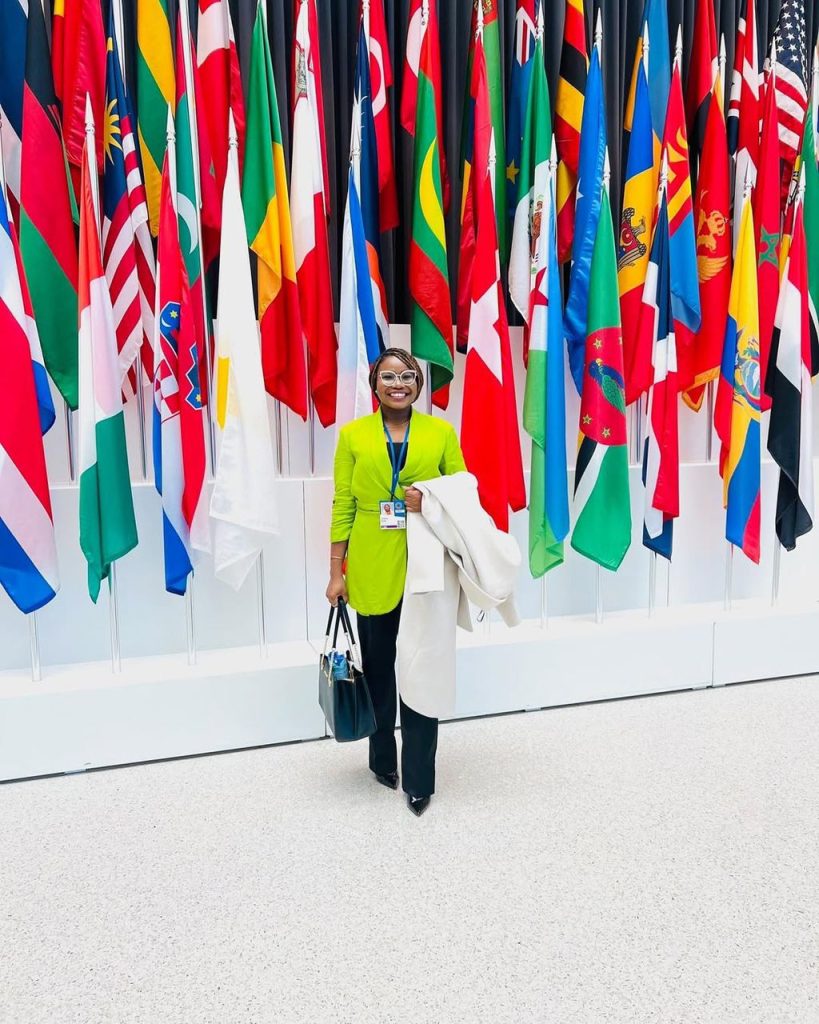
Working across Africa, the UAE, and North America has shown me that financial innovation is inseparable from its local context. Each market is shaped by cultural dynamics, infrastructure, and regulations; so designing impactful solutions demands a willingness to learn, adapt, and collaborate on the ground.
In Africa, for instance, mobile finance and fintech have unlocked unprecedented inclusion and entrepreneurial growth. The UAE stands out for its proactive strategies of building robust ecosystems, leveraging global connections, and fostering innovation through effective governance and investment in talent. North America brings scale and speed, driving breakthroughs through digital & tech platforms.
Still, the lesson there is universal: the most resilient organizations are those that listen globally, act locally, and never underestimate the power of adaptation in a rapidly evolving financial landscape.
Let’s talk about Tap-a-CFO by The X Element. What inspired you to create it, and how do you see it changing the way entrepreneurs and creatives manage their finances?
Tap-a-CFO was created from the realization that being a visionary or an innovator does not automatically mean you understand your numbers. I have felt a deep responsibility to democratize access to finance, both the knowledge and the tools, because financial illiteracy has quietly become one of the greatest obstacles facing companies, founders, and CEOs.
Too often, the very sound of the word “finance” sends a chill through business owners. It can feel exclusive, complex, or even intimidating, and that feeling can leave innovators unsure of what to do next. It is something I encounter constantly. In recent months, I have spoken with many CEOs who openly acknowledge this gap, and it continues to reaffirm why this work matters so much.
Tap-a-CFO is my response to that gap. It is my way of making finance accessible, practical, and relatable so that innovators do not lose their biggest ideas simply because they cannot make sense of their numbers. I often say that finance is the wind beneath innovation. If you do not understand that wind, the flight eventually stops.
My hope with Tap-a-CFO is that entrepreneurs and creatives begin to approach finance differently. Not perfectly, but with confidence. I want them to focus on what truly matters, such as building, creating, and imagining, while knowing they have the financial clarity to sustain their vision. My dream is for finance to become the least of any innovator’s problems.
You’ve been teaching entrepreneurs about business finance on your social media. Why is financial literacy so important to you, and what impact are you seeing?
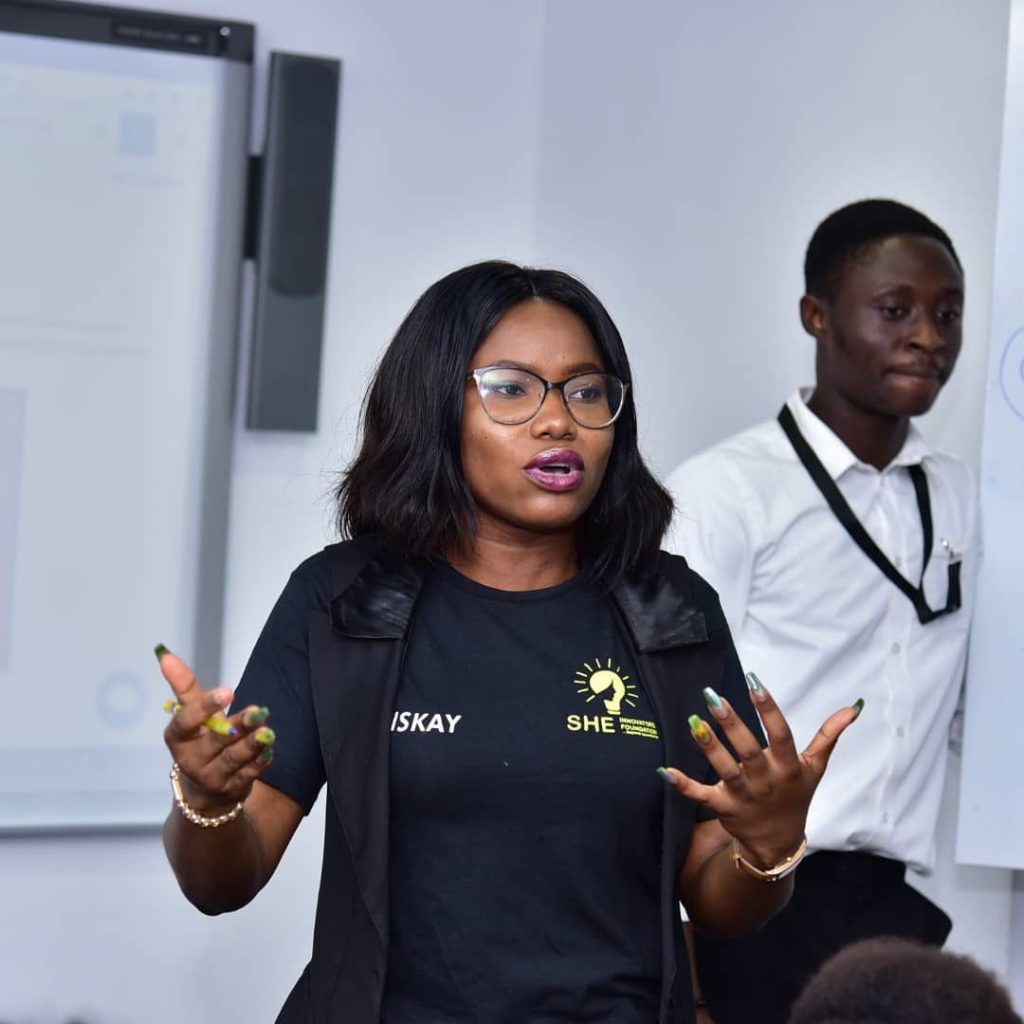
Financial literacy matters deeply to me because those who have gone far in business often did so through understanding it. Finance is powerful. Sometimes I wonder if it was intentionally left out of our formal education systems, from elementary school to university, because the gap it has created is staggering.
What concerns me most is how that gap has quietly become a defining factor between those who move forward and those who remain stuck. Financial literacy, and even more so the mindset behind it, is a game changer. That is why I am intentional about teaching it in the simplest possible way. It is not that hard; you just need to learn it. And if you cannot learn it yourself, find a trusted partner who can walk with you.
The impact has been incredible to witness. I receive messages from entrepreneurs saying things like, “I finally understand what financial clarity means for my business,” or “I did not realize there were funding options beyond venture capital.” Many are discovering how simple finance can be when it is explained in everyday language, and how empowering that simplicity feels.
What excites me most is the creativity that follows. I see entrepreneurs pricing smarter, making bolder decisions, and telling more confident stories about their businesses through their numbers. It is happening across Africa, the UAE, North America, and beyond. Watching that shift unfold has been one of the most rewarding parts of my work.
On social media you said, “They want to see the steel in your eyes, the conviction in your tone, the evidence that you’ve already bet on yourself before asking anyone else to.” How do those words speak to your own journey?
That statement speaks very deeply to my own journey. The truth is, people can always tell when you are wavering. They can sense uncertainty before you ever say a word. As a mentor to several startups, I see it often in founders and entrepreneurs. It is difficult to work with someone who has not yet believed in themselves.
When I talk about the steel in your eyes, I am referring to resolve. It is that quiet and unshakable decision that says, “I am going to do this, no matter what it takes.” The conviction in your tone grows from that resolve. The evidence that you have bet on yourself is the tangible proof of it, the track record of your persistence.
For me, I have had to bet on myself many times. Through every “no,” every disappointment, and every morning I have stayed in bed trying to recover from something that did not work out. I have cold-messaged people on LinkedIn because I believed I had something worth sharing. I have applied for opportunities I knew I deserved, sometimes several times. There was one particular opportunity I applied for three times over four years. The third year, I told myself I was done. But when I saw the application open again, something in me whispered, “Try one more time.” I did, and that decision changed everything.
That is what betting on yourself looks like. Getting into one of the world’s top accelerators, working with Nasdaq, and being invited into global spaces all came from choosing to show up again and again. It came from refining my value proposition repeatedly because I know I have something meaningful to offer, and I must keep finding ways to express it and to prove it.
Every morning when I wake up, that is what I am doing: betting on myself. Even when I do not plan to, my mind naturally goes there. It has become the one constant in my life. I keep showing up for myself.
You’ve mentored and advised hundreds of businesses, from JackMa’s African Business Hero platform to Techstars and Nasdaq Milestone Makers. What do you believe is the “X factor” that separates successful entrepreneurs from the rest?
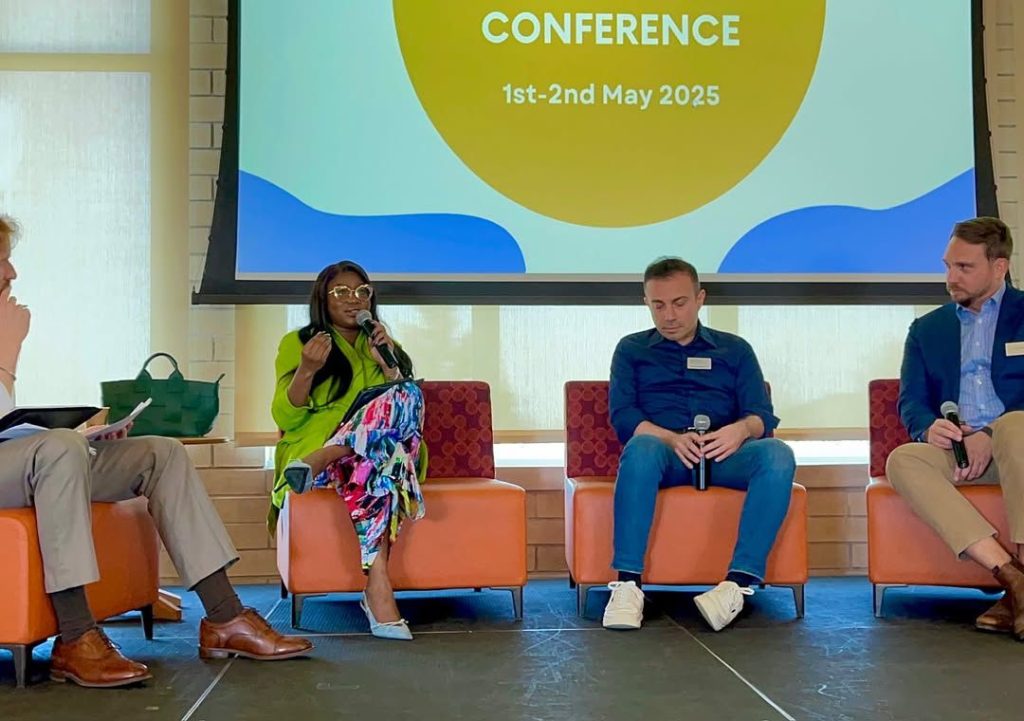
The X factor is a blend of clarity, conviction, and consistency. When those three come together, they create a kind of momentum that feels almost magnetic.
Clarity matters because you must know what you are building, not just what you are doing. Conviction matters because the journey will test you, and it is that inner fire that keeps you moving when logic says to stop. Consistency matters because even the best ideas mean nothing if you do not keep showing up for them, day after day.
Across the founders I have worked with in Africa, the UAE, and North America, the ones who truly stand out are not always the most funded or the most connected. They are the ones who are grounded in purpose, open to learning, and relentless about execution. They understand that entrepreneurship is not about glamour; it is about stewardship. And that, to me, is the real X factor.
Finance can often feel intimidating for young founders. How do you balance making it approachable while still maintaining rigor and precision in your teaching and advising?
Honestly, I am still figuring that out. When I first started sharing financial insights online, I found it challenging because the way we are taught in traditional finance is very different. In that world, jargon is part of the culture. It is how you establish credibility among peers. Naturally, I brought that same language into my content, and it did not resonate..
At some point, I realized that speaking the way I do in finance circles was not helping the people I truly wanted to reach. It was creating distance instead of clarity. So I made a shift. I stopped trying to sound like finance and started focusing on translating finance.
I would not say I have perfected the balance, but what helps me is stepping outside myself and seeing through the eyes of the people I want to serve. Their questions often guide my answers. The simplicity in how they ask teaches me how to explain more effectively.
What I have learned is that rigor does not have to mean rigidity. You can preserve the depth and precision of finance without making it feel inaccessible. And that is where the real magic happens, when precision meets empathy.
You’ve worked in investment banking, clean energy, venture capital, and design. Which of these experiences shaped you the most, and why?
All of my experiences have shaped me in different ways. I am a multidimensional person, and each of those paths has carved something distinct within me.
Design, however, is my natural language. It is the way I see the world and my default lens. Even before I formally studied it, I now realize that design was how I interpreted everything I did. I was constantly looking for systemic solutions, observing patterns, and identifying underlying problems. That instinct to connect dots and redesign systems has always been a part of me.
Investment banking taught me endurance and discipline, the kind that only long hours and high stakes can build. Venture capital taught me discernment and strategic focus, understanding what to pursue, what to decline, and how to balance vision with viability.
Clean energy changed me on a deeply human level. Working in that space, especially in Nigeria, expanded my heart. Those two and a half years felt like seven in intensity and transformation. They showed me what it means to work at the intersection of impact and infrastructure.
All of these experiences together have shaped who I am today. They have allowed me to have meaningful conversations about finance, innovation, and design anywhere in the world, and to see not just the numbers but also the patterns, the gaps, and the possibilities in between.
On a personal note—have you ever felt scared, unworthy, or out of place as a young woman building your brand and legacy on such global stages? How did you overcome those feelings?
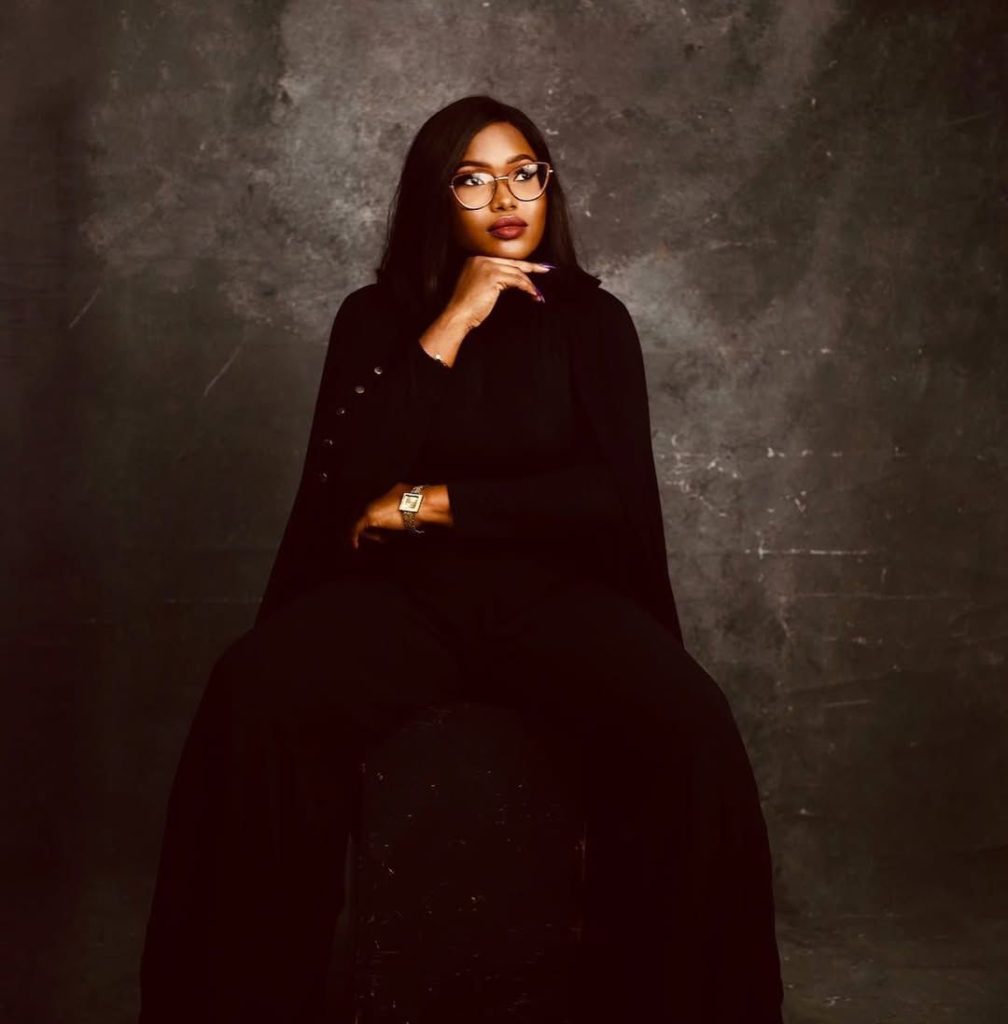
I’ve felt scared many times, but interestingly, that came later in life. Unworthy? Not quite. I’ve always felt that I belonged to something much bigger than myself. People who knew me when I was younger might have mistaken that for arrogance, but it was really a deep inner knowing that I was meant for more.
Out of place? Not really. I’ve always been able to hold my own in any room, even from a young age. I’ve always believed that I belonged on global stages, not because I felt entitled to them, but because I felt aligned with them.
But fear was different. I didn’t understand fear as a teenager or even in my early twenties. I didn’t know it intimately until I learned it from others through their caution, their doubts, and their projections. I absorbed it, and when it finally hit me, it hit hard.
How did I overcome it? Honestly, through God first, and then through an unrelenting desire to do more. For me, fear disappears only when I’m doing the very thing that scares me. I don’t have a formula or a ritual; I just know that not doing it robs me of my peace.
And peace, for me, is non-negotiable. So I often have to choose between fear and peace, and peace wins every time. Once I recognized that pattern, it became simple: I just do the thing. Because if I don’t, the dissonance inside me becomes louder than the fear itself.
You’re also creative—you dance, you tell stories, you’re learning violin. How does creativity influence your work in finance and strategy?
I often say that creativity and analytical thinking are like yin and yang in my life. I need the creative part of me to think deeply and analytically, and I need the analytical part of me to express creatively. I don’t fully understand why it works that way; I just know that it does.
My favorite part of finance and strategy is the creative process: shaping ideas into systems and bringing something entirely new into existence. Most people think of finance as purely operational, about building models, crunching numbers, or structuring deals. But at its core, finance is art. It is design.
Think about it. The people who developed concepts like HLBV accounting to address shifting ownership structures, or who envisioned blended finance or debt-for-nature swaps, were being deeply creative. Those ideas were born from imagination, not routine.
That is the part that excites me most: using finance as an instrument of design. Because finance, in itself, is design. It is how we architect possibilities and structure outcomes that did not exist before.
So for me, creativity is not separate from finance; it is the essence of it. The more creative I am, the more imaginative and strategic I become, even with numbers.
With so many honors and fellowships—CELI, One Young World, Atlantic Dialogue, World Bank—you’ve been recognized widely. How do you stay grounded through it all?
I wouldn’t say I stay grounded all the time, but I would say I’m grounded most of the time. That’s largely because I’m intentional about keeping my environment grounded.
That environment includes my close friends, my inner circle, and the communities I choose to spend time in. It also includes the atmosphere I create around me, the rhythms and habits that keep me centered.
I don’t like to call them rituals, but I’ve learned what works for me. For instance, when I wake up in the morning, I prefer not to talk to anyone or engage too much with the outside world until around noon. Those early hours are sacred. They are my time to think, to pray, to center myself, and to hear my unadulterated thoughts before the world starts making demands.
I’m also very selective about what I hear and what I see. I guard what I allow into my space because I know how easily energy can shift. That discipline is what truly keeps me grounded.
Finally, what’s next for Chrissie Kayode? What legacy do you want to leave behind, and what message do you want young Africans—especially women—to take from your journey?
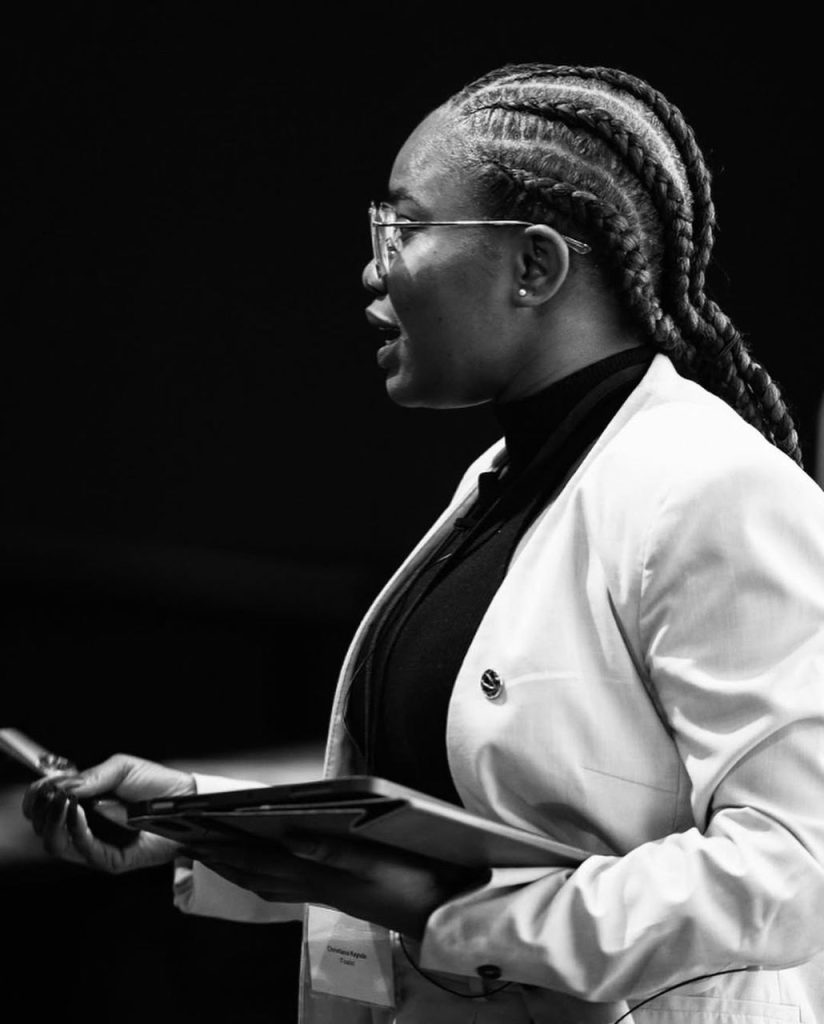
I want to be remembered for daring to live fully and to live in the fullness of my truth. I want to be remembered as the woman who was audacious enough to follow her convictions even when they led her in a different direction from everyone else.
At my core, I’m a problem solver. So beyond personal courage, I hope to build institutions, systems, and ideas that endure structures that democratize access to finance and make it more human, more intuitive, and more just. That is the legacy I want: to leave behind frameworks that empower others long after I’m gone.
For young Africans, especially women, I hope my journey says this: you can be everything you are. You can be bold, brilliant, creative, strategic, soft, and strong all at once. You can define your own path and still belong deeply to purpose.
As for what’s next, it is about expanding The X Element, expanding impact, and writing my imprint on the sands of time globally. There is still so much more to build, and I am here for all of it.
Closing Note
Chrissie Kayode reminds us that finance isn’t just a means to an end—it’s a language of possibility, growth, and agency. Through her teaching, her tools, and her voice, she’s nurturing a generation that doesn’t just ask “Why?”, but acts on “What is possible.” Her journey is a mosaic in motion—and we’re watching it unfold with purpose.




Leave a Reply