


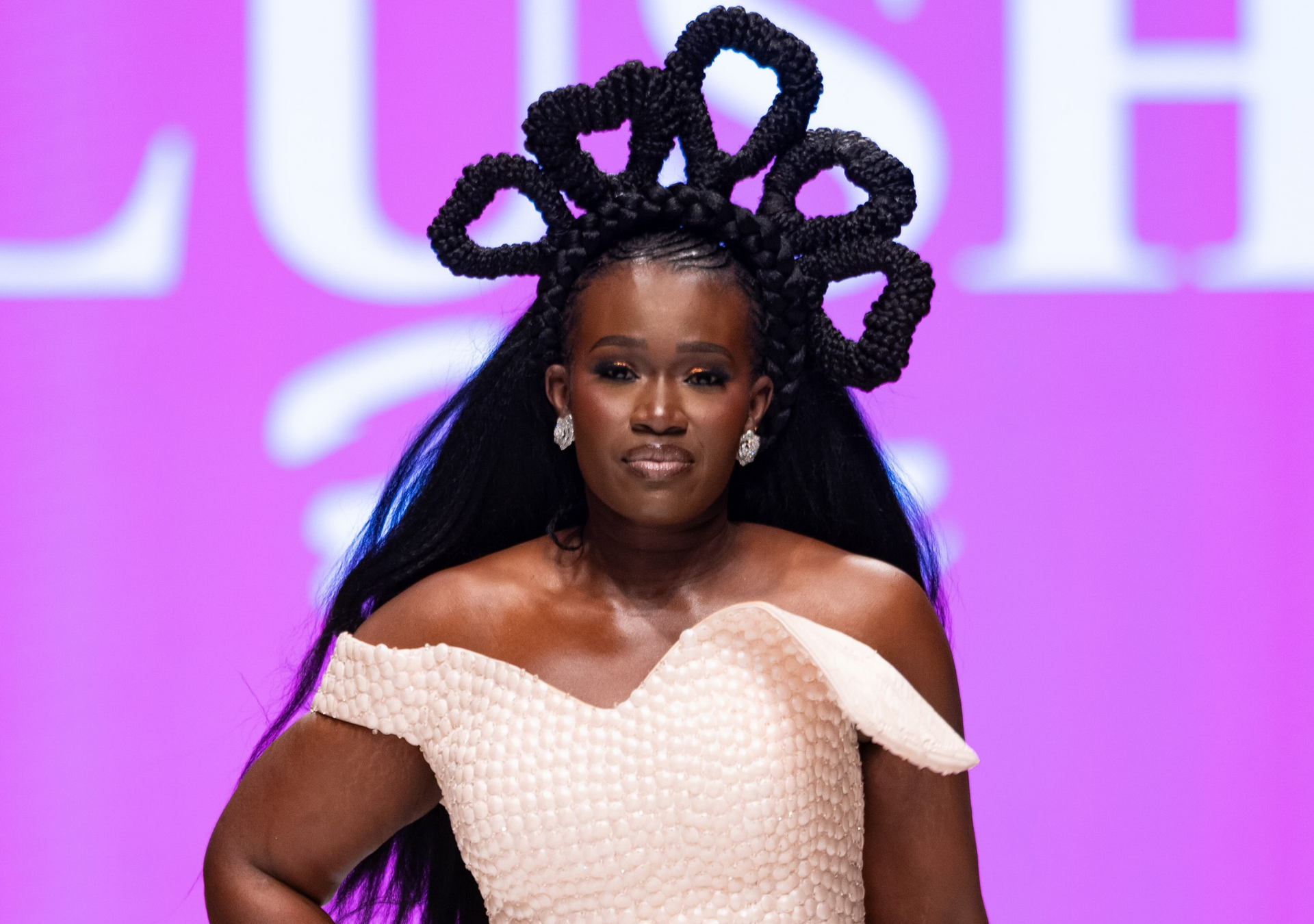
Lagos Fashion Week 2026 brought together designers, models, fashion enthusiasts and other creatives for five days of fashion and industry activities in Lagos. Beyond the runway presentations, the event offered a closer look at the ideas, skills and people shaping African fashion today.
Lagos Fashion Week 2026: Celebrating 15 Years of African Fashion
Founded in 2011 by fashion entrepreneur Omoyemi Akerele, Lagos Fashion Week has grown into an important platform for showcasing African designers and connecting them with buyers, fashion professionals and international audiences. Organised by Style House Files, the event has also expanded beyond runway shows to support the growth and development of the African fashion industry.
The 2026 edition marked 15 years since the platform was established. Held from October 28 to November 1 in Lagos, this year’s event brought together designers and other industry players for runway presentations, fashion discussions and other activities.
The Theme: CRAFTED – Heritage, Innovation and Circular Futures
The theme for Lagos Fashion Week 2026 was “CRAFTED: Heritage. Innovation. Circular Futures.” It placed African craftsmanship at the centre of conversations about the future of fashion, bringing attention to traditional techniques while exploring how they can be adapted to modern design and production.
Heritage focused on the skills and traditions that have shaped African fashion over generations. These include weaving, dyeing, embroidery, beadwork and other forms of handmade craftsmanship. The theme recognized the cultural value of these practices and the artisans who continue to preserve them.
Innovation explored how designers could take these traditional skills further by combining them with contemporary ideas, materials and design techniques. It showed that African craftsmanship can continue to evolve while retaining its cultural roots.
Circular Futures brought attention to more responsible ways of making and using fashion. This includes reusing materials, reducing textile waste, making clothing that lasts longer and finding ways to create new designs from existing resources.
Together, the three ideas presented a vision of African fashion that values its heritage while making room for new approaches to creativity, production and sustainability.
The Designers and Collections That Defined the Week
More than 50 fashion labels featured across the Lagos Fashion Week 2026 programme, with designers presenting different approaches to contemporary African fashion. The main runway shows took place from October 29 to 31 at the LagosFW Tents, Federal Palace Hotel, Victoria Island, while other presentations were held at different locations around Lagos.
Opening Presentations: A First Look at the Collections
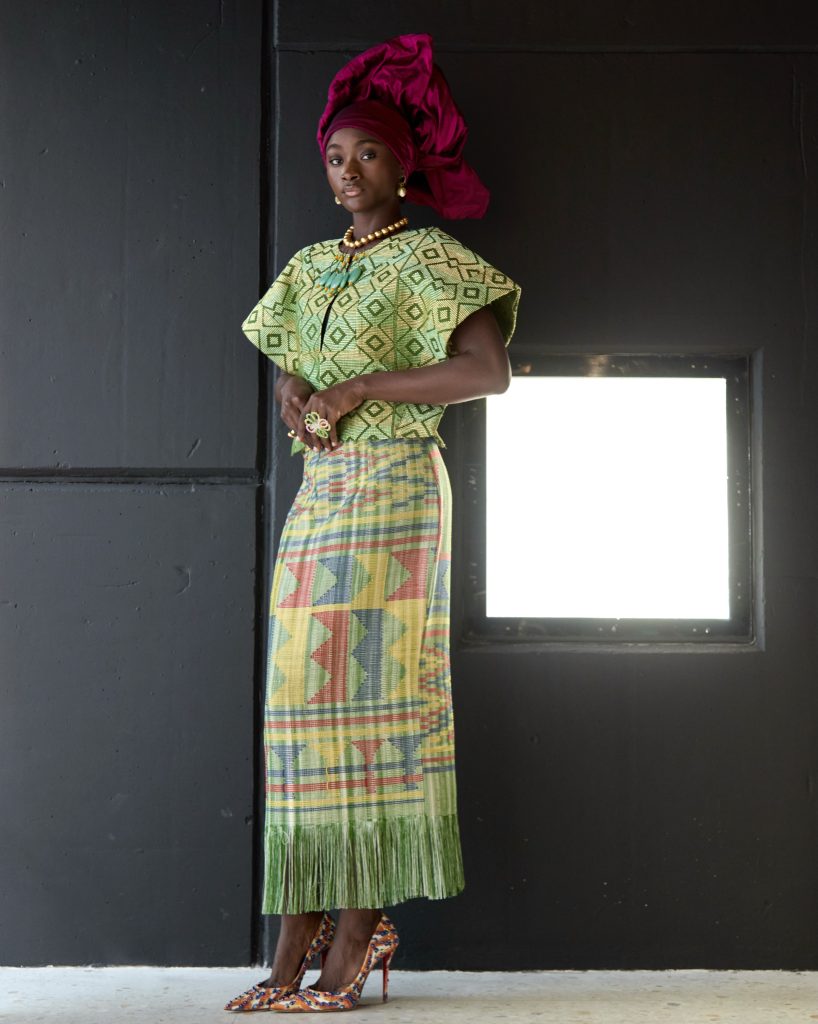
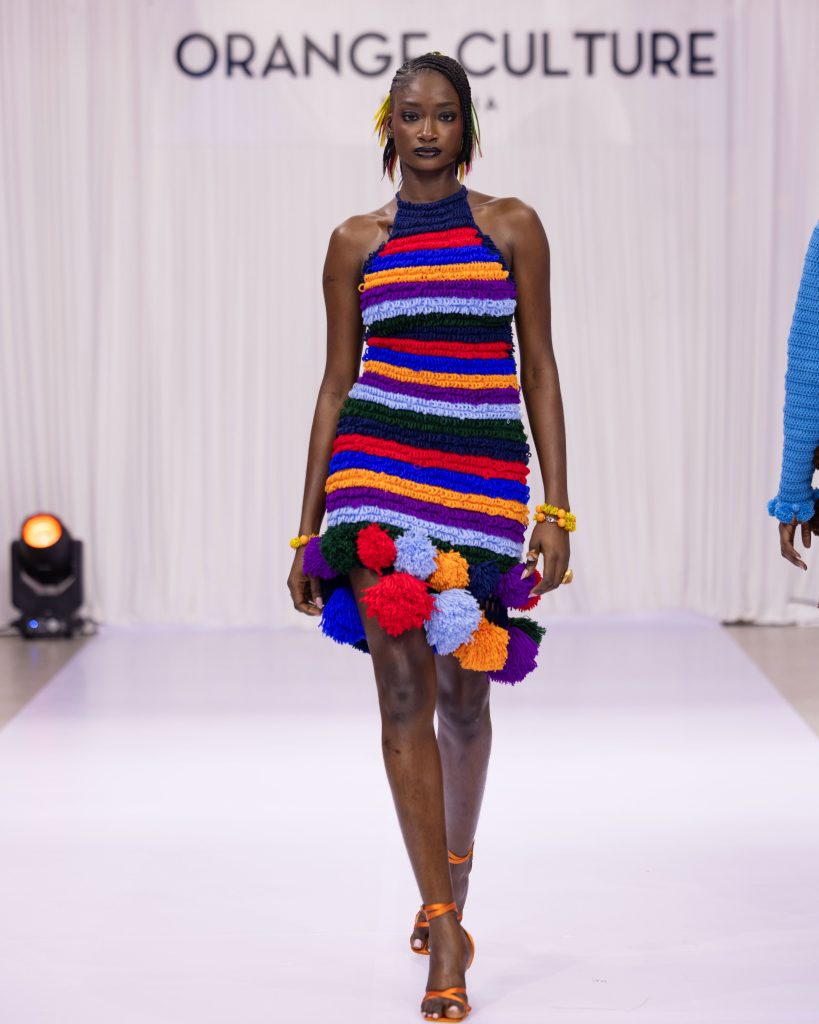
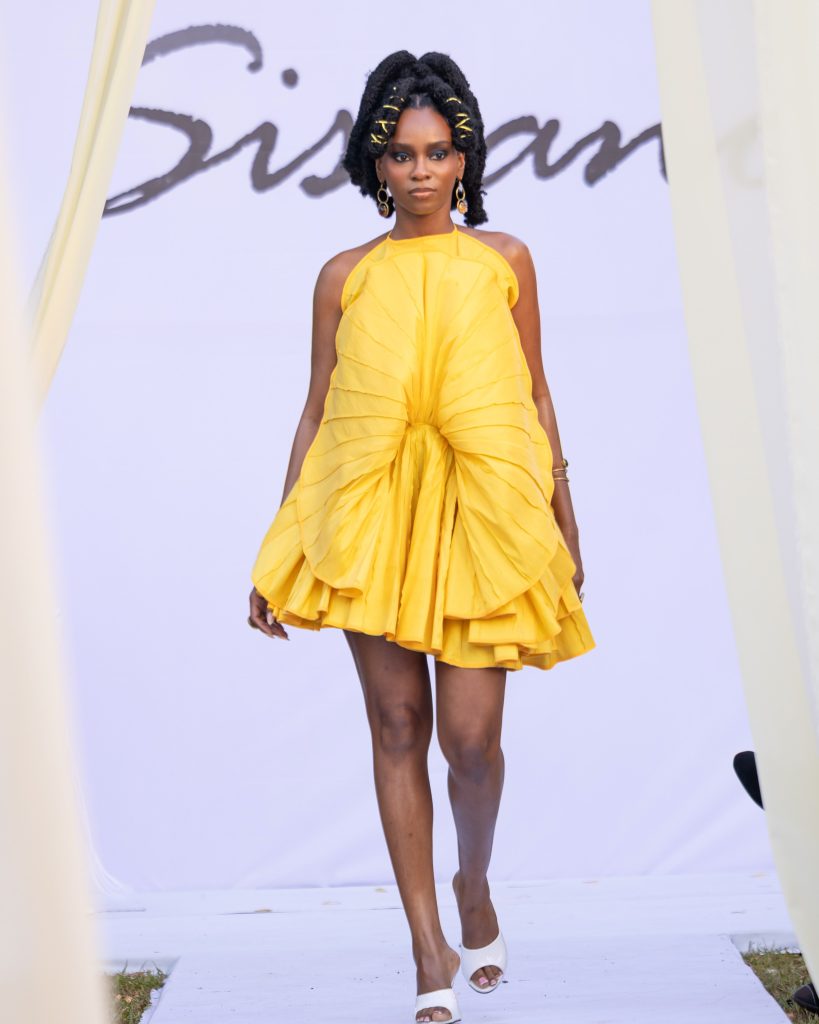
The opening presentations took place on Wednesday, October 28, giving attendees an early look at some of the collections ahead of the main runway programme. Three labels featured: Sisiano, ALÁRA in collaboration with Emmy Kasbit, and Orange Culture.
Sisiano presented its Spring/Summer 2027 collection, Some Birds Fly South, featuring hand-printed fabrics, sheer materials and fringe details. The collection also explored relaxed menswear silhouettes, using fabric and movement to shape its overall look.
ALÁRA and Emmy Kasbit presented Akwete Reimagined, a capsule collection built around Akwete, a traditional Nigerian woven textile. The collaboration brought the fabric into contemporary designs, showing how an established weaving tradition could be interpreted for modern fashion.
Orange Culture presented The In-Between, its Spring/Summer 2027 collection. The designs combined familiar silhouettes with uneven proportions, sheer layering, hand-stitched details and looped-yarn surfaces, creating different textures and forms throughout the collection.
Thursday, October 29: Traditional Craft Meets Contemporary Design
Thursday marked the beginning of the main runway presentations at Lagos Fashion Week 2026. The day’s programme featured a mix of established and emerging designers, with collections exploring traditional textiles, contemporary tailoring, streetwear and different approaches to craftsmanship. Before the evening runway shows, Kilentar held an offsite presentation at 3 p.m.
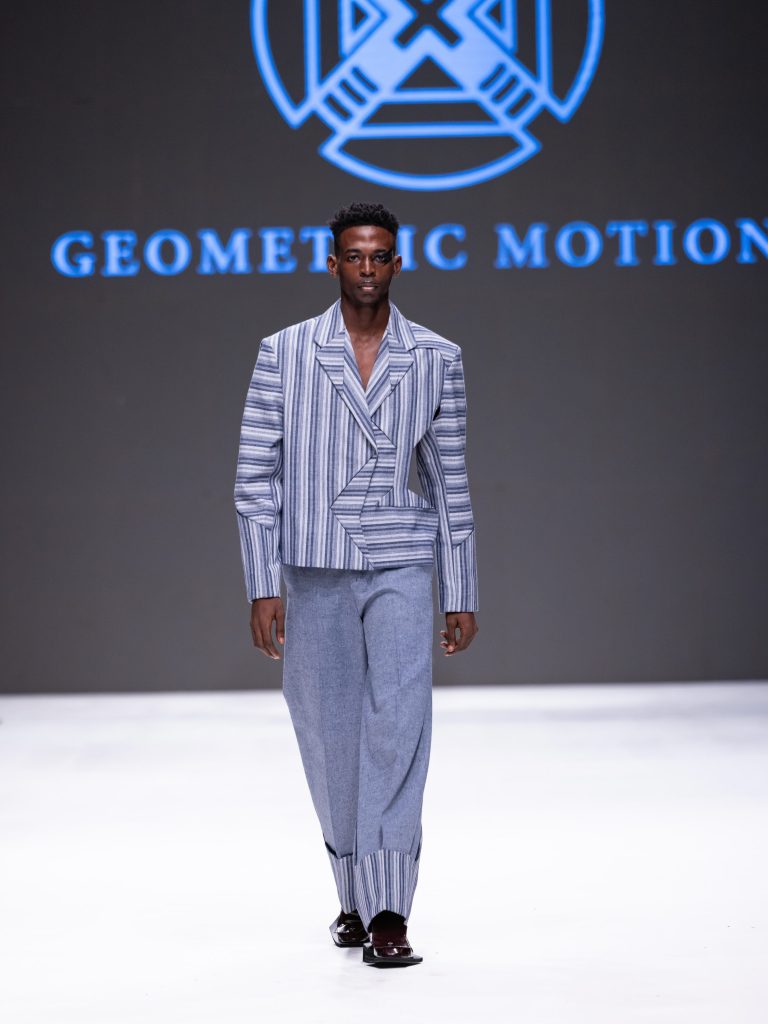
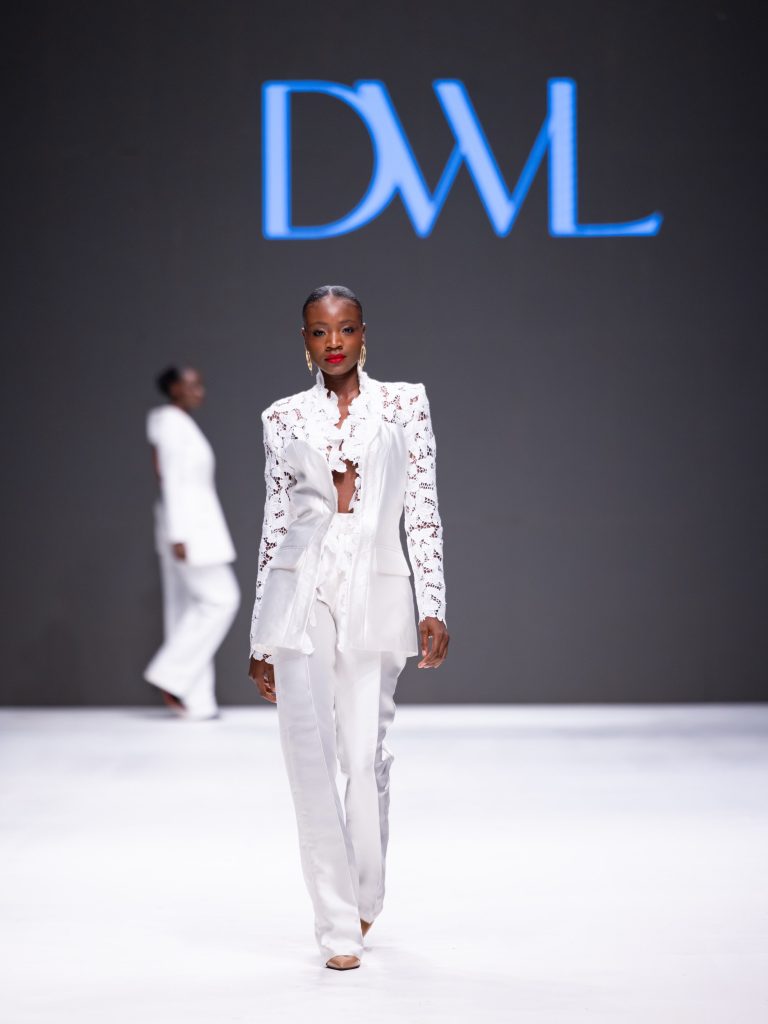
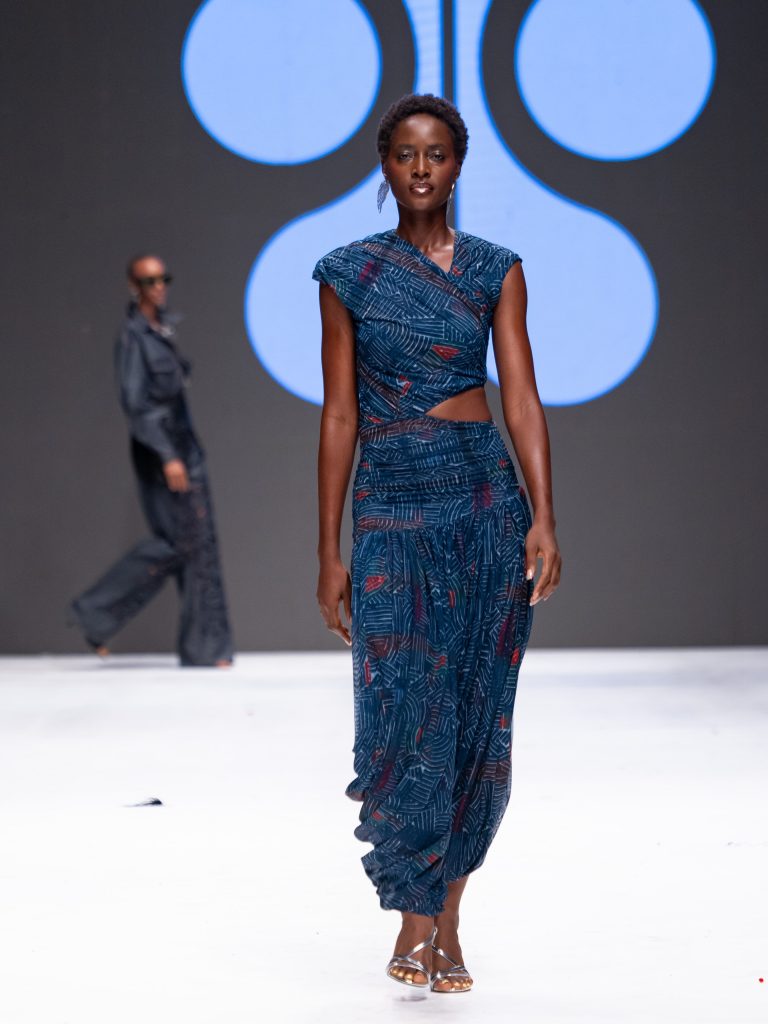
The runway programme began with Hertunba, For Style Sake, DWL and Geometric Motion Design Lab. Hertunba presented drop-waist silhouettes with statement fringes and beaded details, using shades of blue, brown and black. For Style Sake’s Áríyá collection combined textured tweeds, multicoloured polka dots, structured Aso Oke pieces, organza and sheer dresses. DWL explored structured tailoring, rich colours and contemporary silhouettes, while Geometric Motion Design Lab brought geometric cuts together with elements of streetwear and traditional suiting.
The next presentations featured Dust of the Earth, Bakusoraya and Maliko. Dust of the Earth explored nostalgia and identity through graphic prints, textured fabrics and fabric manipulation. Bakusoraya, a label based in the Republic of Benin, placed indigenous textiles at the centre of its collection, using embroidery and fringed details. Maliko took a more understated approach, presenting relaxed silhouettes and simple tones.
At 7 p.m., Ajanée, Iremide, Street Souk and Sevon Dejana took the runway. Ajanée’s Spring/Summer 2027 collection, Masquerading (Cloth as Spirit), explored material reuse by deconstructing existing garments, including old jerseys, and transforming them into dresses. Iremide presented colourful occasionwear, while Street Souk brought together four designers through streetwear-inspired looks, including bomber jackets, detachable hoodies, experimental headwear and leather interpretations of the traditional agbada. Sevon Dejana’s collection featured floral embroidery, bold embellishments and structured silhouettes.
The 8 p.m. presentations included Garbe, ChicNicity, Imprint South Africa and Oshobor. Garbe brought vibrant prints, strong colour combinations and playful silhouettes to the runway. ChicNicity explored fluid shapes, sculptural details and bright colours, while Imprint South Africa worked with graphic textiles and voluminous forms. Oshobor took a more theatrical direction, using textured surfaces and a striking mix of yellow, red and purple.
The final runway slot featured Cute Saint, Christie Brown, Cynthia Abila and Nkwo. Cute Saint incorporated Adire fabric and cowrie embellishments, ending its presentation with a masquerade performance. Christie Brown combined neutral tones, chiffon prints and metallic details with sharp tailoring. Cynthia Abila presentedThe UnCommon Ground, a collection dedicated to her father, while Nkwo continued to explore sustainable design through carefully constructed, relaxed silhouettes.
Friday, October 30: Personal Stories and Experimental Designs
Friday’s runway presentations brought together designers exploring personal experiences, cultural influences, experimental silhouettes and different approaches to contemporary fashion. The day’s programme began at 5 p.m. with Imad Eduso, Pepperrow, Dukun and Bornstar Nigeria.
Imad Eduso presented a collection that marked a move into menswear, expanding the label’s creative direction. Pepperrow explored handcrafted details and prints, while Dukun drew inspiration from Itsekiri culture. Bornstar Nigeria (BNG) also featured in the opening presentation slot.
The 6 p.m. presentations featured Ibilola Ogundipe, IGC Fashion, Sahrazad and Studio Imo. Sahrazad presented Inner Child, a collection inspired by the designer’s journey of self-discovery and healing, with Moroccan craftsmanship and cultural influences reflected in its colours, patterns and designs. Studio Imo presented Clan, a Spring/Summer 2027 collection built around the idea of community and collaboration. Working with creative partners, including 21 Wool Street, the label showcased its signature crochet techniques alongside knitwear and other handcrafted pieces.
At 7 p.m., the runway featured Fiu Negru, Pettre Taylor, Jermaine Bleu and Mot. The Label. Pettre Taylor presented The Middlemen, a collection exploring the connection between generations and the passing down of stories, culture and craftsmanship. Knitwear, woven fabrics and oversized denim pieces featured prominently. Jermaine Bleu brought Kente-inspired designs into contemporary fashion, while the other labels added their own interpretations of modern African style.
The 8 p.m. slot featured Irapada, Abiola Olusola, Lush Hair, LFJ and Bloke. Abiola Olusola presented Bound for Lagos, a collection inspired by the city, with colourful prints, pattern combinations, flowing dresses and carefully placed fringe details. Bloke introduced its first Designer-in-Residence presentation, featuring Pelumi Oyewo’s Tzar Bomba. The collection explored Black identity and futuristic dressing through metallic finishes, sheer fabrics and utilitarian-inspired pieces. Irapada and the other labels completed the evening’s lineup.
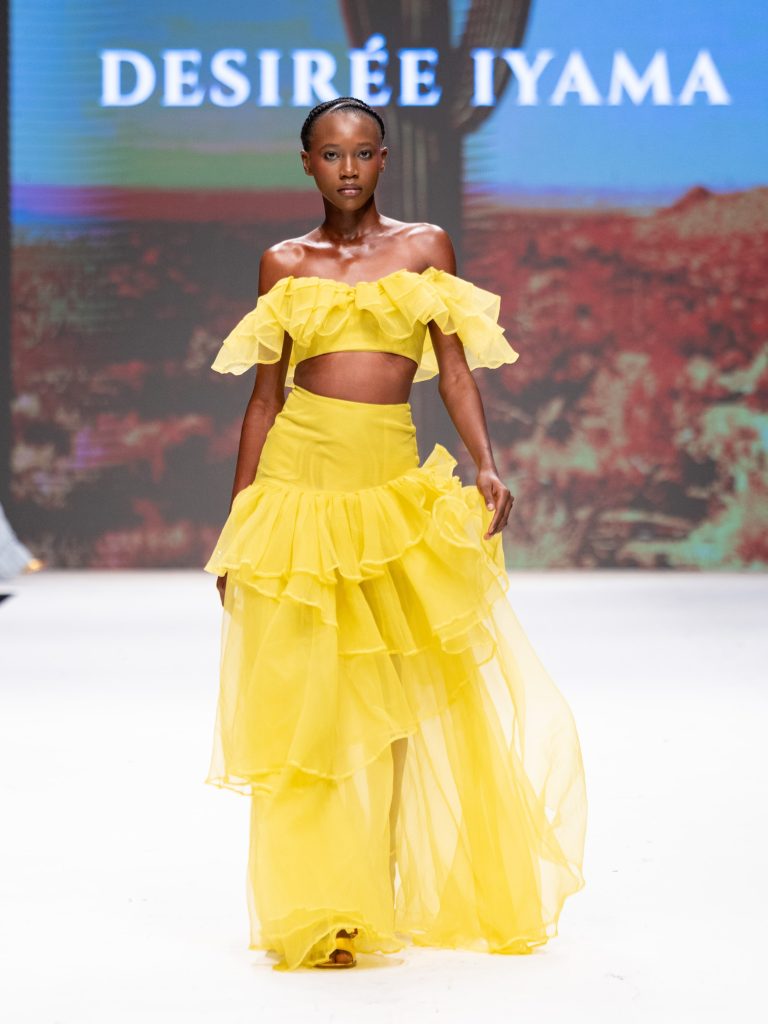
The final runway presentations at 9 p.m. featured Désirée Iyama, JZO and Ekikere. Désirée Iyama marked 10 years in the fashion industry with its Spring/Summer 2027 collection, This Is Why. The collection explored the designer’s return to the creative ideas behind the brand, using fluid silhouettes, floral details, ruffles and a mix of colours including green, chartreuse, red and white.
Friday’s activities continued after the runway shows. At 10:30 p.m., Lagos Fashion Week partnered with Bandage for a live music experience, bringing fashion and music together to close the day’s programme.
Saturday, October 31: Established Names and New Creative Directions
Saturday marked the final full day of runway presentations at Lagos Fashion Week 2026. The day’s collections brought together established designers and emerging labels, with different interpretations of contemporary African fashion, from structured tailoring and traditional textiles to experimental silhouettes.
The 5 p.m. presentations featured Bridget Awosika, Holy One, NYA and Malité. Bridget Awosika returned with a collection exploring structure, fluidity and understated dressing. The designs featured gathered and folded waistlines, elongated hemlines and contrasting textures. NYA presented In Praise of Beauty, combining drop-waist silhouettes, embroidery, sheer layers, fringe and shimmer, alongside oversized carved bags.
HO1Y One, a British-Nigerian label, explored a softer direction for menswear through bold stripes, cascading frills, structured two-piece tailoring and leather pieces. Malité presented hand-printed fabrics layered over tulle, with fringes, ruffles and intricate cutouts appearing across its designs.
At 6 p.m., the runway featured Pillz’n Poizn, Dimeji Ilori, E.S.O by Liman and Boyedoe. Pillz’n Poizn’s collection explored a renewed use of colour, combining bright and neutral shades across floor-length gowns, cutouts and irregular hemlines. Fringe details also added movement to some of the pieces.
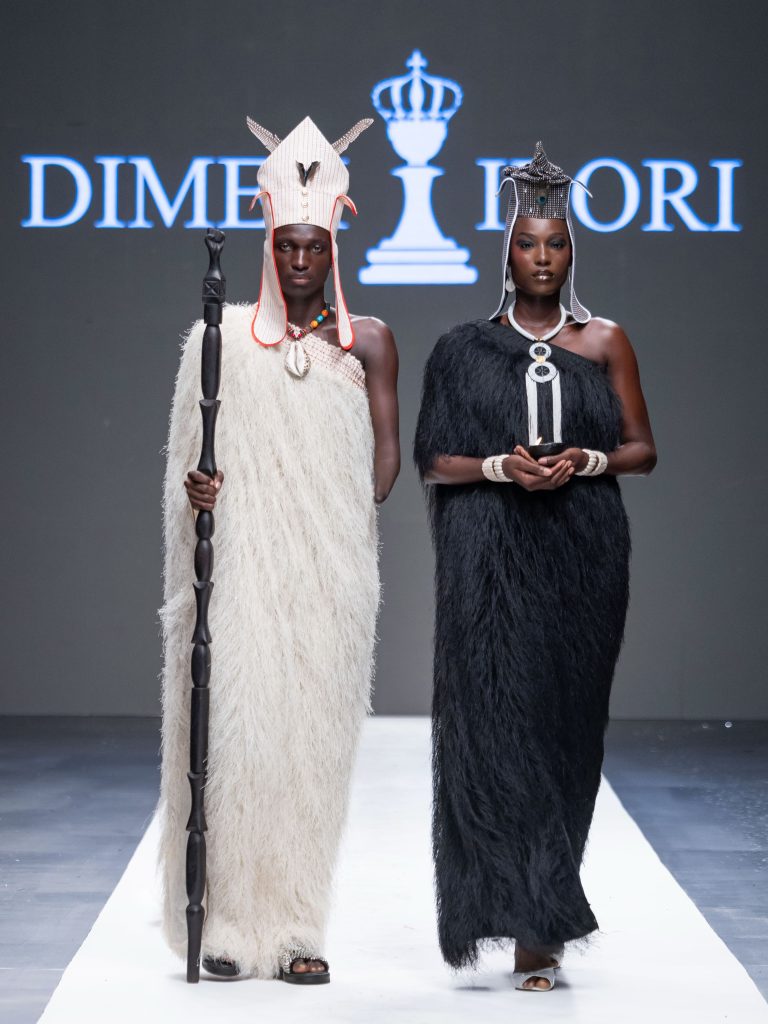
Dimeji Ilori presented Ancestral Intelligence, a collection that explored the relationship between traditional African craftsmanship and contemporary fashion. The designs reinterpreted Aso Oke and traditional silhouettes through sculpted forms, embroidery, cowries details and textured menswear, showing how cultural heritage can inspire modern design. E.S.O by Liman presented Cosmic Bodies, a collection inspired by the different personalities and lived experiences of Yoruba women. It featured feminine silhouettes, hand-dyed fabrics, textured pieces and checkered prints, alongside reimagined iro and buba styles.
Ghanaian label Boyedoe brought its signature Kente textile into contemporary designs, combining it with frayed silhouettes, sharp tailoring and structured, distressed denim. Its colour palette included white, earthy shades, dark denim and teal green.
The 7 p.m. presentations featured Israella Kobla, Studio Namnyak, Jewel Jemila and FIA. They were followed at 8 p.m. by Mariah Bocoum, Elie Kuame, Y’Wande and Eki Silk, completing the evening’s lineup of designers from different parts of the African fashion industry.
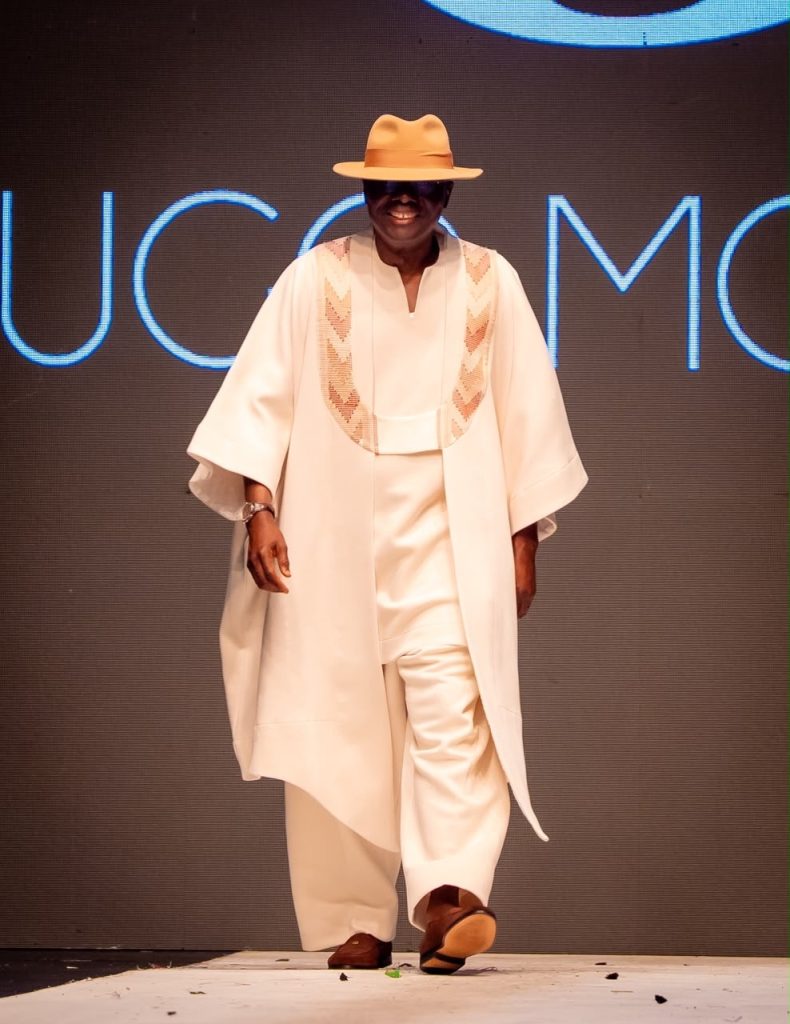
The final runway slot at 9 p.m. featured Fruché, Ejiro Amos Tafiri and Ugo Monye, alongside a Heineken presentation. Ugo Monye brought architectural-inspired designs and voluminous menswear silhouettes to the runway. His presentation also featured a surprise appearance by Lagos State Governor Babajide Sanwo-Olu, who walked in one of the designer’s looks.
The evening continued with the Heineken Lagos Fashion Week After Party, scheduled for 10:30 p.m., bringing the main runway programme to a close.
Sunday, November 1: The Final Presentations – Lagos Fashion Week Moves Offsite
The final day of Lagos Fashion Week 2026 moved beyond the main runway venue, with six designers presenting their work through offsite showcases and an open studio across Lagos. The programme offered a different way to experience fashion, allowing designers to present their collections and creative identities in more intimate settings.
IAMISIGO, founded by Nigerian designer Bubu Ogisi, opened the day’s programme at noon. Known for its experimental approach to African craft, the label draws inspiration from ancestral textiles, traditional handcrafting techniques and materials sourced from different parts of the continent.
At 4 p.m., Lagos-based label Oríré took its turn. Founded by Oríré Aleshinloye, the brand is known for its feminine silhouettes, refined detailing and contemporary approach to dressing. It gained wider international attention in 2024 when Meghan Markle wore its red ‘Dire’ dress during her visit to Nigeria.
Gozel Green followed at 5 p.m. Founded by twin sisters Sylvia Enekwe-Ojei and Olivia Enekwe-Okoji, the Nigerian label combines contemporary design with African cultural references. Its approach includes colour-blocking, asymmetrical designs and the reuse of leftover materials, connecting its work to the conversations around circular fashion.
At 6 p.m., Andrea Iyamah opened its studio to visitors. Founded by Nigerian designer Andrea Dumebi Iyamah, the fashion and lifestyle brand is recognised for its bold colours, distinctive prints and sculptural silhouettes. The open studio offered a chance to experience the brand outside the traditional runway format.
Emmy Kasbit followed with an offsite presentation at 7 p.m. Founded by Emmanuel Okoro, the label is known for bringing traditional Nigerian textiles, including Akwete, into contemporary fashion. Its work explores how indigenous fabrics and techniques can be reinterpreted through modern silhouettes and design.
Lisa Folawiyo closed the day’s programme at 8 p.m., bringing the five-day event to an end. The designer is widely recognised for her distinctive use of Ankara fabrics, which she transforms through intricate embellishment, beadwork and contemporary tailoring. Her presentation provided the final showcase of Lagos Fashion Week 2026.
The Fashion Business Series: Conversations Beyond the Runway
Alongside the runway presentations, Lagos Fashion Week 2026 created space for conversations about the business side of African fashion through its Fashion Business Series. Held from Wednesday, October 28, to Saturday, October 31, the programme brought together designers, investors, fashion professionals and other industry stakeholders to discuss some of the challenges and opportunities shaping the industry.
The opening day’s discussions focused on the people and business structures behind fashion. One of the sessions, Crafted: By Whom, For Whom and at What Cost?, examined the role of textile artisans in the fashion industry and the need for designers to build fairer, more sustainable relationships with the craftspeople whose skills contribute to their collections. Other conversations explored fashion business models, franchising and access to financing for Nigerian fashion businesses.
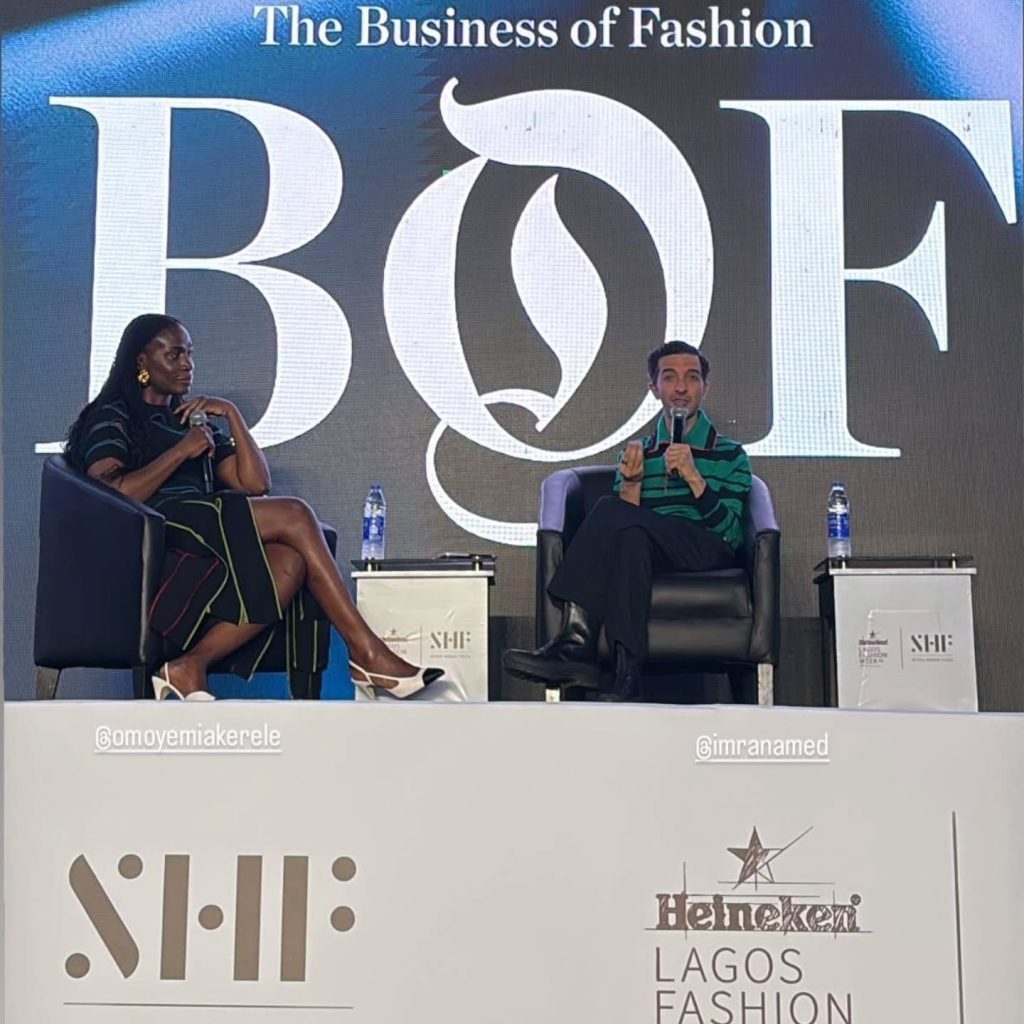
On Thursday, October 29, attention turned to ownership, intellectual property and the long-term survival of fashion businesses. A fireside conversation between Lagos Fashion Week founder Omoyemi Akerele and Imran Amed, founder of The Business of Fashion, explored curiosity and the ability to adapt to change. Other sessions examined overconsumption, the protection of designers’ creative work and the challenges of building fashion companies that can continue beyond their founders.
Friday’s programme explored financing and collaboration. Discussions considered how fashion businesses could attract investment, improve production capacity and build partnerships that support long-term growth. Another session examined the relationship between fashion brands and content creators, including the importance of authentic collaborations and maintaining audience trust.
The final day of the series, Saturday, October 31, focused on scaling fashion businesses and preparing them for wider markets. Sessions explored funding, production management, international wholesale logistics and the partnerships required to expand a brand. There were also conversations about turning public attention into lasting business growth and understanding the requirements for entering luxury retail.
One of the major discussions was Capital, Craft & Commerce: Scaling African Fashion for Global Demand, organised in partnership with BusinessDay. The session addressed the commercial realities of taking African fashion brands beyond their existing markets.
Across the four days, the Fashion Business Series highlighted an important part of the African fashion industry: creativity alone is not enough to build a lasting fashion business. Access to finance, skilled artisans, intellectual property protection, production capacity, effective partnerships and retail opportunities all play a role in helping designers turn their creative work into sustainable businesses.
Green Access 2026: Supporting the Next Generation of African Designers
Beyond the runway presentations and fashion industry discussions, Lagos Fashion Week continued its investment in emerging designers through Green Access, its flagship designer development programme. Launched in 2018, Green Access returned in 2026 for its eighth edition, focusing on helping African designers build fashion businesses around craftsmanship, sustainability and responsible production.
This year’s edition was themed CRAFTED IN PRACTICE: Reimagining Craft for a Circular Future. The programme encouraged designers to look beyond the traditional use of African craftsmanship and explore how indigenous techniques, local materials and artisan knowledge could contribute to contemporary fashion and more responsible production methods.
Green Access 2026 focused on four key areas: material innovation through craft, the reinterpretation of heritage techniques, circular and responsible production, and collaboration with artisan communities. Designers were encouraged to experiment with deadstock and reclaimed fabrics, indigenous fibres, weaving, embroidery, dyeing and other traditional techniques while considering how to reduce waste and create pieces with lasting value.
The programme also offered practical learning opportunities through workshops, research activities, circular design masterclasses, prototype reviews, visits to artisan communities and production facilities, as well as business development sessions. Selected designers received mentorship in research and storytelling, design development, circular design, craft and production, business development and communications.
An additional part of the 2026 programme was a two-week textile workshop at the Kokrobitey Institute in Ghana. It brought together textile practitioners and artists from across Africa for practical learning in traditional textile techniques, contemporary design and sustainable production.
The programme was designed to culminate in a presentation at Lagos Fashion Week, where participating designers would showcase capsule collections alongside the materials, research and craftsmanship behind their work. Each designer’s presentation was expected to include a standout piece demonstrating craftsmanship innovation, supported by a material sourcing plan and sustainability impact statement.
Through Green Access, Lagos Fashion Week continues to create opportunities for emerging designers to develop their creative skills while building businesses that recognise the value of local materials, skilled artisans and more responsible approaches to fashion production.
When Celebrities and Public Figures Took the Runway
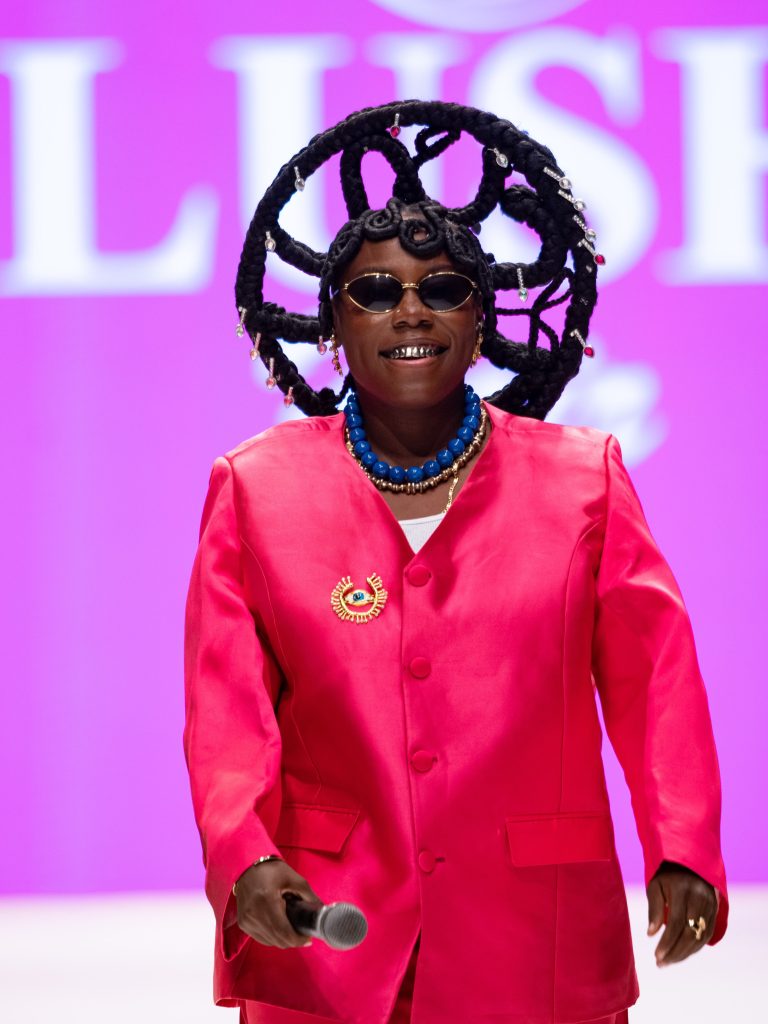
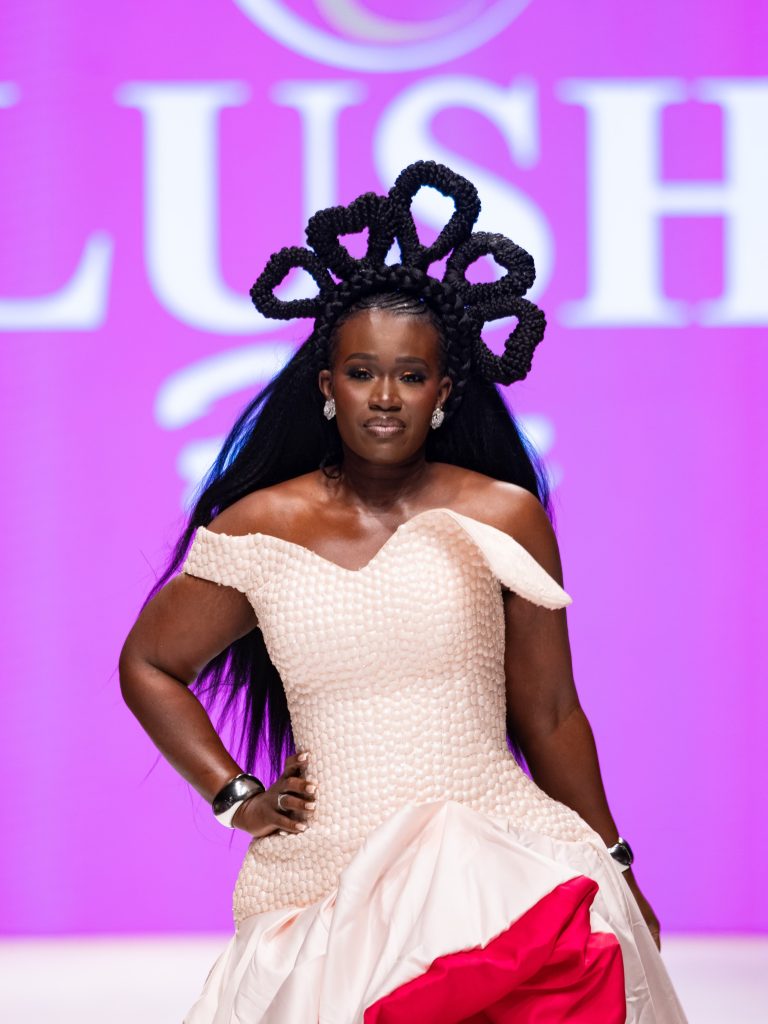
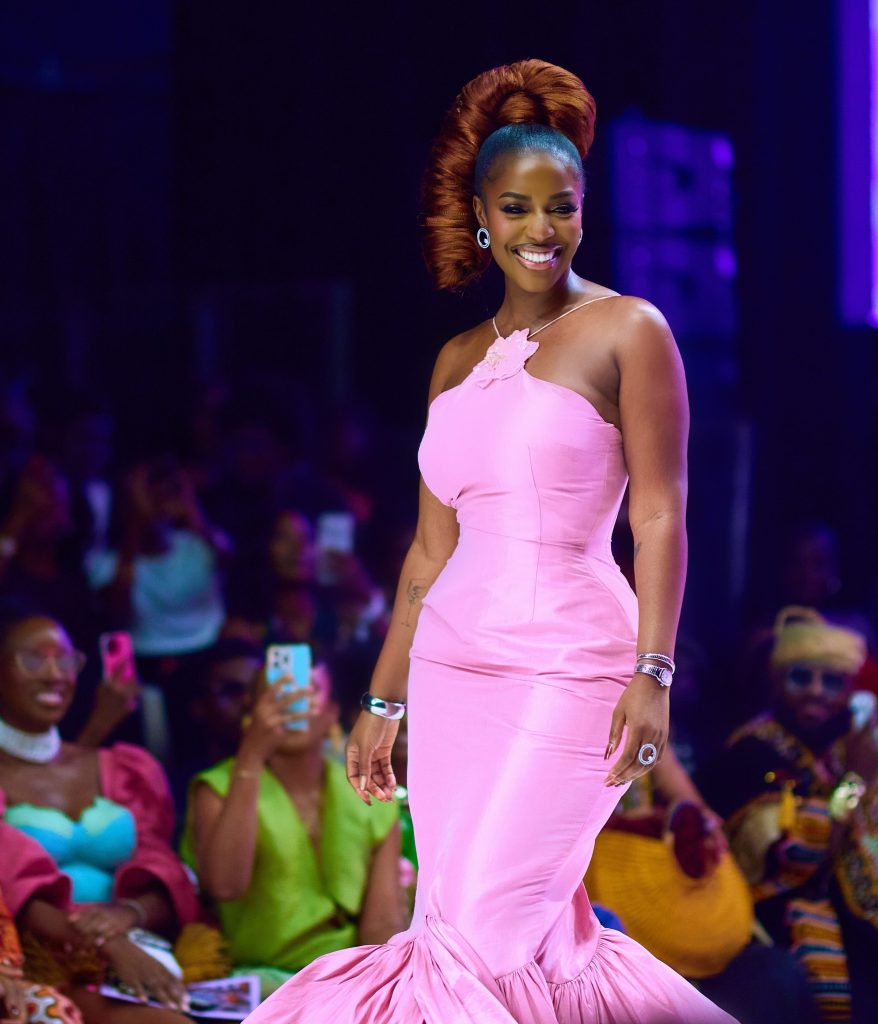
Lagos Fashion Week 2026 brought more than fashion designers and professional models to the runway. Entertainers, content creators, reality television personalities and public figures also took part in different presentations, bringing attention from outside the fashion industry to the event.
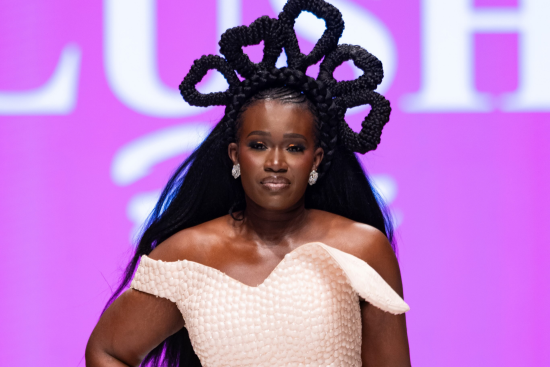
One of the notable appearances came during Lush Hair’s presentation, which featured celebrity chef Hilda Baci, singer Teni Makanaki, comedian Real Warri Pikin, actress Rachael Okonkwo and Temi Nkem. Their participation brought familiar faces from music, comedy, film and entertainment into the fashion showcase.
The presentation also featured Goddessa, winner of Big Brother Naija Season 11, and Folashade Adeleke. Their appearances added to the mix of entertainers and public personalities who joined the models on the runway.
Nigerian singer Zerry DL also made his runway debut during the event, walking for fashion label Oshobor on Thursday, October 29. His appearance brought another music personality into the showcase and attracted attention beyond the runway presentation.
Content creators also featured in the programme. Hauwa, Virtuousi and Teminikan walked during the Mulawwan showcase, showing how social media personalities are increasingly becoming part of fashion presentations and brand collaborations.
One of the most talked-about public figure appearances came from Lagos State Governor Babajide Sanwo-Olu, who walked for Nigerian menswear designer Ugo Monye on Saturday, October 31. It was his second documented runway appearance at Lagos Fashion Week, following his 2023 appearance for Emmy Kasbit.
The range of personalities who took part showed how Lagos Fashion Week brings together different parts of Nigeria’s creative industry. Their participation also gave designers and brands opportunities to reach audiences beyond the usual fashion community.
Memorable Moments and Fashion Statements
Beyond the individual collections, Lagos Fashion Week 2026 produced several moments and fashion statements that stood out across the five-day event. From recurring runway trends to unexpected presentations and brand experiences, these highlights added to the conversations surrounding this year’s edition.
Trends That Stood Out on the Runway
Some trends appeared across several collections, giving the runway a distinct visual character. Fringe details, bold embellishments, textured fabrics and earthy colour palettes featured in different presentations. Red and brown were particularly noticeable, appearing in collections by designers including Hertunba, Sevon Dejana, For Style Sake, Maliko and Christie Brown.
Traditional textiles and handmade details also featured prominently. Aso Oke, Adire, woven fabrics, crochet, cowrie embellishments and feather details were incorporated into contemporary designs. There were also experimental approaches to menswear, including skirts, cropped tops and unconventional silhouettes, challenging familiar ideas about how clothing can be worn.
Sevon Dejana’s Bridal Finale Stole Attention
One of the most talked-about moments of Lagos Fashion Week 2026 came during The Sevon Dejana Brand’s Out of Body presentation. Ghanaian fashion personality Nana Akua Addo closed the showcase in a short, intricately detailed white bridal gown.
Her emotional walk down the runway, which ended with applause from the audience, became a memorable moment of the presentation. Following the show, Nana Akua shared a reflection on Instagram, describing the appearance as more than a fashion moment and connecting the bridal look to the closing of one chapter and the beginning of another.
The finale added an unexpected personal dimension to the collection and attracted attention beyond the fashion audience.
Christie Brown’s Return to the Lagos Runway
Ghanaian fashion label Christie Brown made its return to Lagos Fashion Week after an eight-year absence. Founded by Aisha Ayensu, the brand has built a reputation for combining African cultural influences with contemporary luxury fashion.
Its return was a notable moment for the event, bringing an established Ghanaian label back to the Lagos runway. The collection featured neutral tones, chiffon prints, metallic finishes and sharp tailoring.
Heineken Innovation Studio: An Experience Beyond Fashion
Heineken introduced its Innovation Studio to Nigeria during Lagos Fashion Week 2026, as part of its decade-long partnership with the event. The space was designed as an experiential environment where guests could explore new expressions of taste through experimentation and flavour combinations.
One of its features, Foam Infusions, allowed visitors to experience different flavour combinations. Rather than functioning as a digital fashion design platform, the studio focused on taste, creativity and interactive brand experiences, adding another dimension to the event beyond the runway.
Street Style: Fashion Beyond the Runway
While the runway presentations showcased the collections of African designers, the guests attending Lagos Fashion Week 2026 also brought their own fashion expressions to the event. Outside the main show space, personal style became another part of the fashion experience, with attendees using their outfits to showcase creativity, individuality and their appreciation for African fashion.
Street-style coverage from the first two days captured guests in a range of looks, from carefully styled outfits and statement pieces to designs by Nigerian fashion labels. The photographs also highlighted how fashion enthusiasts interpreted current trends through their own choices of clothing, accessories and styling.
Beyond providing memorable fashion photographs, the street-style scene reflected the relationship between designers and the people who wear their creations. It showed that the influence of Lagos Fashion Week extended beyond the runway, with guests also contributing to the visual identity and conversations surrounding the event.
What Lagos Fashion Week 2026 Means for the Future of African Fashion
What Lagos Fashion Week 2026 Means for the Future of African Fashion
Lagos Fashion Week 2026 showed how African fashion continues to grow beyond individual designers and collections. The presence of designers from countries including Ghana, Côte d’Ivoire, Uganda, South Africa and Morocco reflected the event’s growing role as a meeting point for fashion talent across the continent. It also created opportunities for designers to introduce their work to new audiences and connect with people within the wider fashion industry.
However, the growth of African fashion depends on more than visibility. Designers need access to funding, skilled production teams, reliable manufacturing, retail opportunities and international markets. The conversations held during this year’s Fashion Business Series brought attention to some of these challenges, showing that creative talent must be supported by the right business structures for fashion brands to grow.
There is also a growing need to make African craftsmanship and responsible production part of the industry’s long-term development. Through initiatives such as Green Access, Lagos Fashion Week continued to highlight how traditional skills, local materials and more thoughtful production methods can contribute to contemporary fashion.
Ultimately, Lagos Fashion Week 2026 reflected an industry with strong creative talent and increasing international attention, but one that still needs stronger support systems to reach its full potential. Its future will depend on how well designers, artisans, manufacturers, investors and other industry players work together to turn that creativity into lasting opportunities.
Across its runway presentations, industry discussions and sustainability initiatives, this year’s edition highlighted the creativity, craftsmanship and ideas shaping African fashion. As Lagos Fashion Week marks 15 years, it also points to the work still needed to support designers, strengthen the fashion industry and create more opportunities for African talent. From established labels to emerging designers, the event offered a reminder that African fashion has much more to contribute to the global industry.



Leave a Reply