



Yinka Ogunbiyi is a Nigerian-American engineer and entrepreneur, best known as the founder of Halo and the creator of HaloBraid, a technology designed to assist with hair braiding. Through her work, she is exploring how engineering and innovation can help address the time and physical effort involved in traditional hair braiding. Her journey across engineering, entrepreneurship and product development has positioned her among the innovators bringing technology into the beauty industry.
Yinka Ogunbiyi’s Early Life and Educational Background
Yinka Ogunbiyi grew up in Purley, a town in South London, in a family with Nigerian roots. She comes from a family of engineers who later became involved in the food business as butchers and chefs. Her parents also owned grocery stores and a restaurant, giving her some exposure to business and food from an early age.
She moved to Cambridge, Massachusetts, in the United States, to attend Harvard University, where she studied Engineering Sciences and graduated in 2016. During her time at Harvard, she also explored other interests, including linguistics and music. In an interview, she revealed that she had been interested in studying East Asian Studies but eventually pursued engineering, partly because of her parents’ influence.
After her undergraduate studies, Ogunbiyi returned to Harvard for further education. She completed a joint Master of Science and Master of Business Administration (MS/MBA) programme through Harvard’s School of Engineering and Applied Sciences and Harvard Business School in 2023.
Her educational background would later play a role in her work across engineering, business and product development.
Her First Venture into Entrepreneurship
Yinka Ogunbiyi’s first major business venture came from an engineering project at Harvard. In 2015, while studying Engineering Sciences, she took a course called Engineering Problem Solving and Design Project with her classmate, Michel Maalouly. Their assignment was to develop a smart barbecue smoker that would make cooking easier and more precise.
The project involved studying how heat and smoke moved around food during cooking. Ogunbiyi and her team used computer simulations to test different designs before developing a smoker with an hourglass shape. The design helped distribute heat and smoke more evenly, improving the cooking process.
What started as a classroom project soon became a business. In June 2016, Ogunbiyi, Maalouly and their professor, Kit Parker, launched Desora, a company focused on developing smart cooking appliances. The company later raised $1.5 million from Morningside Ventures to support its product development.
In 2018, Desora partnered with Kamado Joe to introduce its first products, including the SlōRoller, a grill insert designed to improve the circulation of heat and smoke, and the iKamand, a smart grill controller that allowed users to monitor and control cooking temperatures through a smartphone app.
Ogunbiyi spent several years building the company and bringing its products to market. Her experience with Desora marked an important part of her journey as an entrepreneur and gave her the opportunity to turn engineering ideas into products for everyday use.
The Experience That Inspired HaloBraid
Yinka Ogunbiyi’s idea for HaloBraid came during the COVID-19 lockdown in 2020. Having worn braids for most of her life, she was used to spending long hours at the salon. However, when she was unable to visit her hairstylist during the lockdown, she decided to braid her own hair for the first time.
The experience turned out to be more difficult than she expected. It took her four days to complete her hair. As an engineer, Ogunbiyi began thinking about how the repetitive process of braiding could be made easier with technology. She wondered why there was no machine that could help people braid hair faster.
Her experience also made her think about the hairstylists who spend several hours braiding clients’ hair. Many of them experience hand cramps and physical strain from repeating the same movements throughout long appointments. She saw an opportunity to develop a solution that would help both hairstylists and their clients.
Ogunbiyi began working on a device that could handle the repetitive part of braiding while allowing professional hairstylists to remain in control of the process. This idea became the foundation for HaloBraid, her attempt to bring innovation into an aspect of beauty that had received little technological attention.
Building HaloBraid into a Reality
Turning her idea into a working device required years of research, testing and improvements. Ogunbiyi partnered with David Afolabi, an MBA graduate of Harvard Business School, to develop the technology. Their goal was to create a device that could handle the repetitive movements involved in braiding while allowing professional hairstylists to maintain control over their work.

One of the major challenges was getting the machine to work with human hair. Unlike many materials used in engineering, hair is flexible and can easily tangle. The team had to find a way to guide the hair through the device without pulling it or affecting the quality of the braid. They also worked with professional hairstylists, whose feedback helped them improve the design.
After developing and testing hundreds of versions, the team created HaloBraid, a device designed to assist with individual braids, including box braids and knotless braids.
The process begins with the hairstylist sectioning the hair, deciding the size and pattern, and starting the braid by hand. The hair is then guided into the device, which uses its braiding mechanism to complete the repetitive weaving. This allows the stylist to focus on other parts of the process and finish the hairstyle.
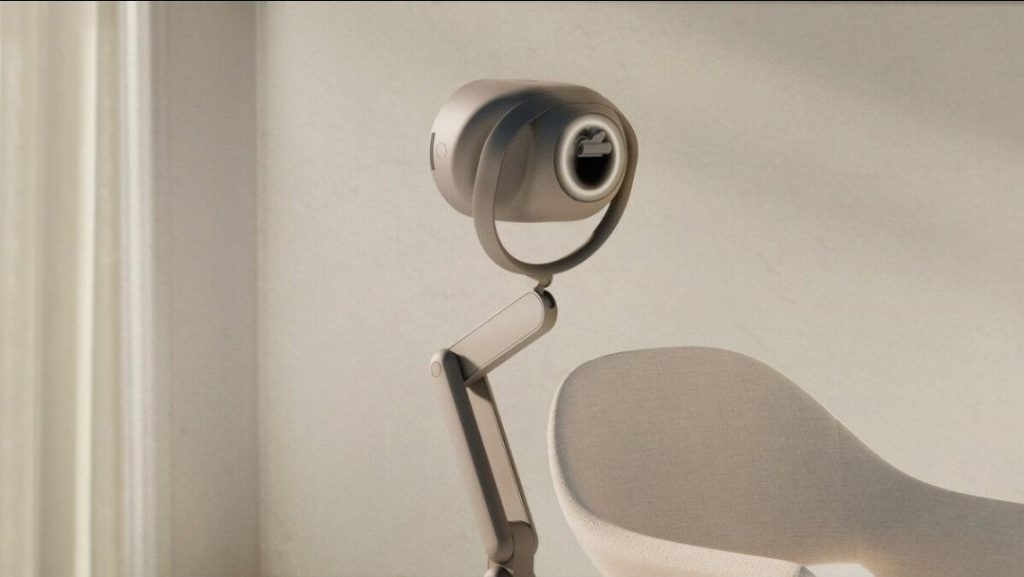
HaloBraid is not designed to replace hairstylists or create every hairstyle on its own. It works alongside them and is intended for individual braids rather than cornrows or styles braided directly against the scalp. According to the company, it can complete individual braids up to five times faster than manual braiding, although the actual time saved depends on the hairstyle and the stylist’s workflow.
Achievements and Recognition
Yinka Ogunbiyi’s work on HaloBraid has earned recognition from both Harvard University and the wider business community. In 2023, she received an Ingenuity Award at Harvard’s President’s Innovation Challenge for her work on the hair-braiding technology.
Two years later, she returned to the competition and won the Alumni and Affiliates Open track with HaloBraid, receiving the $75,000 grand prize in May 2025. The award recognised the team’s work on developing a technology to make hair braiding faster and easier.
Her work also attracted attention in Nigeria. In July 2026, the Nigerians in Diaspora Commission (NiDCOM) publicly congratulated her on the development of HaloBraid, recognising her contribution as a Nigerian-American engineer.
Another major milestone came in June 2026 when Halo secured $7 million in seed funding. The investment round was led by Seven Seven Six, with participation from AlleyCorp and Bling Capital. The funding will support the company’s product development, manufacturing and salon partnerships as it prepares to bring HaloBraid to the market.
Taken together, these milestones have brought Ogunbiyi’s work to the attention of the technology, business and beauty industries, while giving her team more resources to develop its innovation.
Yinka Ogunbiyi’s Legacy and Impact
Yinka Ogunbiyi’s work is bringing a new approach to an aspect of beauty that has relied heavily on manual skill for generations. Through HaloBraid, she is exploring how engineering can be used to make hair braiding easier, particularly for people with Afro-textured hair. Her work also draws attention to the need for more technology designed with the needs of this community in mind.
Beyond making the process faster, Ogunbiyi wants to address the physical demands that come with professional hair braiding. Hairstylists spend long hours repeating the same hand movements, which can put pressure on their hands and wrists. HaloBraid is designed to handle some of this repetitive work while allowing stylists to remain in control of the hairstyle, from sectioning the hair to deciding the final look.
The technology could also change the experience for clients by reducing the time spent in salon chairs. For hairstylists, it could create opportunities to manage appointments more efficiently and serve more customers. However, its long-term effect will depend on how well it performs in everyday salon settings and how easily professionals can adopt it.
For Ogunbiyi, the goal is not to take the human touch out of hair braiding but to use technology to support the people who make it possible. As HaloBraid moves into salon use, her work represents an effort to combine traditional hairstyling skills with modern engineering and create more possibilities for the future of textured haircare.





Leave a Reply