


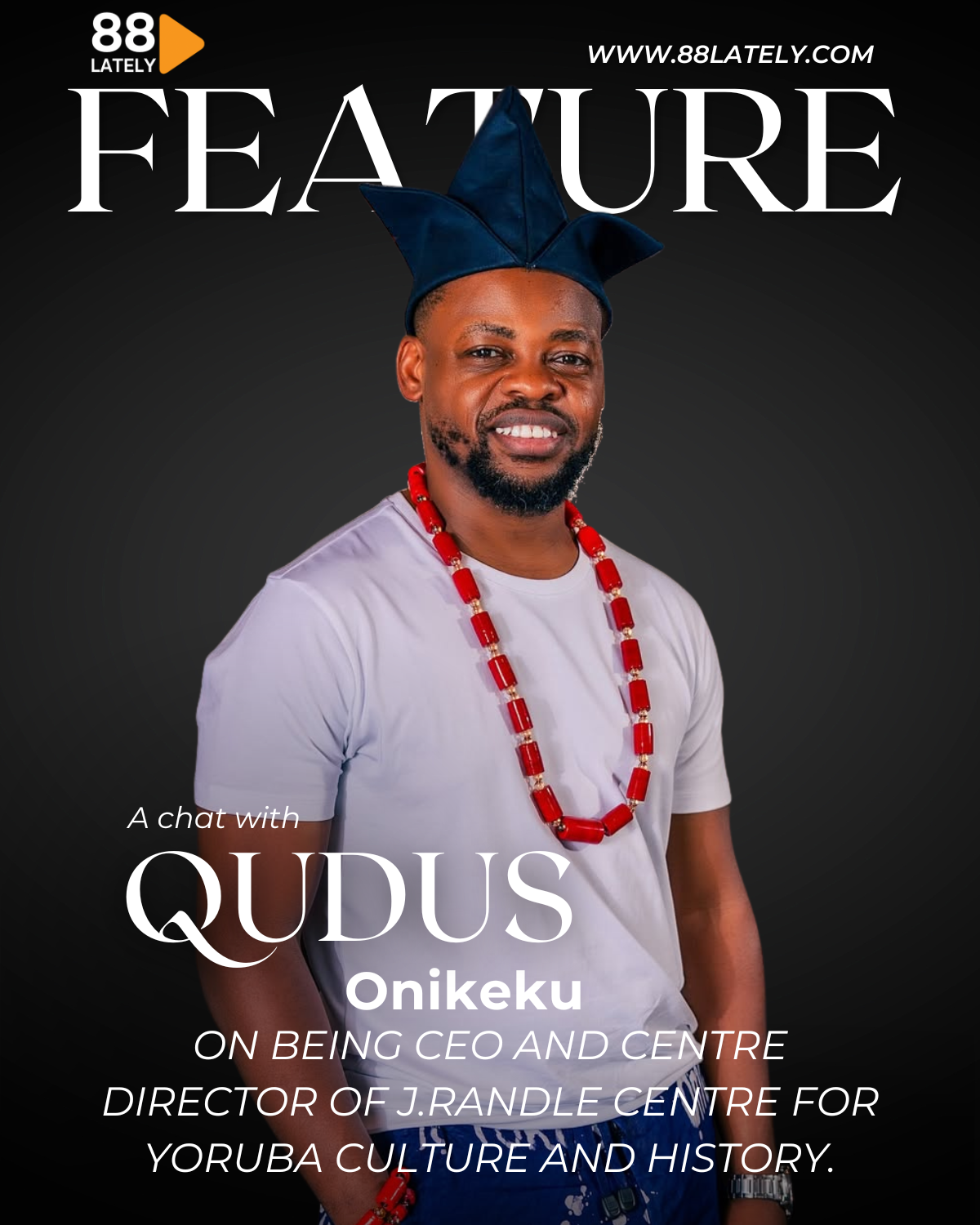
Qudus Onikeku wears many hats: artist, thinker, curator, cultural architect, social impact engineer, and now Centre Director of the J. Randle Centre for Yorùbá Culture and History. Known globally for his groundbreaking work in dance and performance, he’s bringing the same creative energy into how heritage is presented in Lagos today.
Born and raised in Lagos, Qudus’ artistic journey started on the city’s vibrant streets before expanding onto international stages. He is an alumnus of the National Higher School of Circus Arts in France, where he trained in dance, circus and physical theatre—a background that continues to shape his deeply multidisciplinary approach to creativity. His Lagos upbringing gave him the raw pulse of urban life, while his global exposure refi ned his artistry, creating a balance between street rhythm and intellectual rigor.
Under his leadership, the Centre has evolved from being a museum into a living, breathing space for art, education, and celebration. From Ọjà Àṣẹ to Yorùbá Philosophy Night, Yorùbá Games, Onise Ona, Design Week Lagos, movie premieres, and even Tacha’s Guinness World Record event, the Centre has become one of Lagos’ busiest creative landmarks that is bridging the past and the future.
In this conversation with Folasade Abimbola, Qudus speaks about his journey, the making of a modern cultural institution, and what’s next for the J. Randle Centre.
You’ve been known globally for your remarkable work in dance and choreography, but today you’re also the Centre Director of the J. Randle Centre for Yorùbá Culture and History. How did you make that transition, and what prepared you for this role?
Thank you very much Folasade for having me. The transition, I’ll say, was quite fl uid. For the whole of 2024 I was planning to host Afropolis 2024, which was sponsored by Lagos State, at the J. Randle Centre when the news of my appointment came—while we were on tour in the UK. Nothing felt abrupt, I had by then generated a certain kind of bond with the centre.
I’ve always been a community organiser and performance curator. Much of my artistic practice involved transforming Lagos itself into a stage, working across disciplines, neighbourhoods, and social classes. I’m one of the few artists here who moves fl uidly between art forms and codes, and that prepared me deeply for this role.
Since relocating from Paris in 2014, I’ve gradually moved beyond being “just” an artist. Culture work—systems building, infrastructures, long-term thinking—began to occupy my interest. I don’t think there’s a better space in Nigeria right now to pursue that work at the scale I need. One reason I travelled so much before was that Nigeria had become slightly too small for my ideas and growth. This Centre presents the right magnitude of challenge. It makes me feel the flow again.
Many people still think of the Centre as a very beautiful and picturesque museum, but it’s clear you see it as something more dynamic. How would you describe what it truly is?
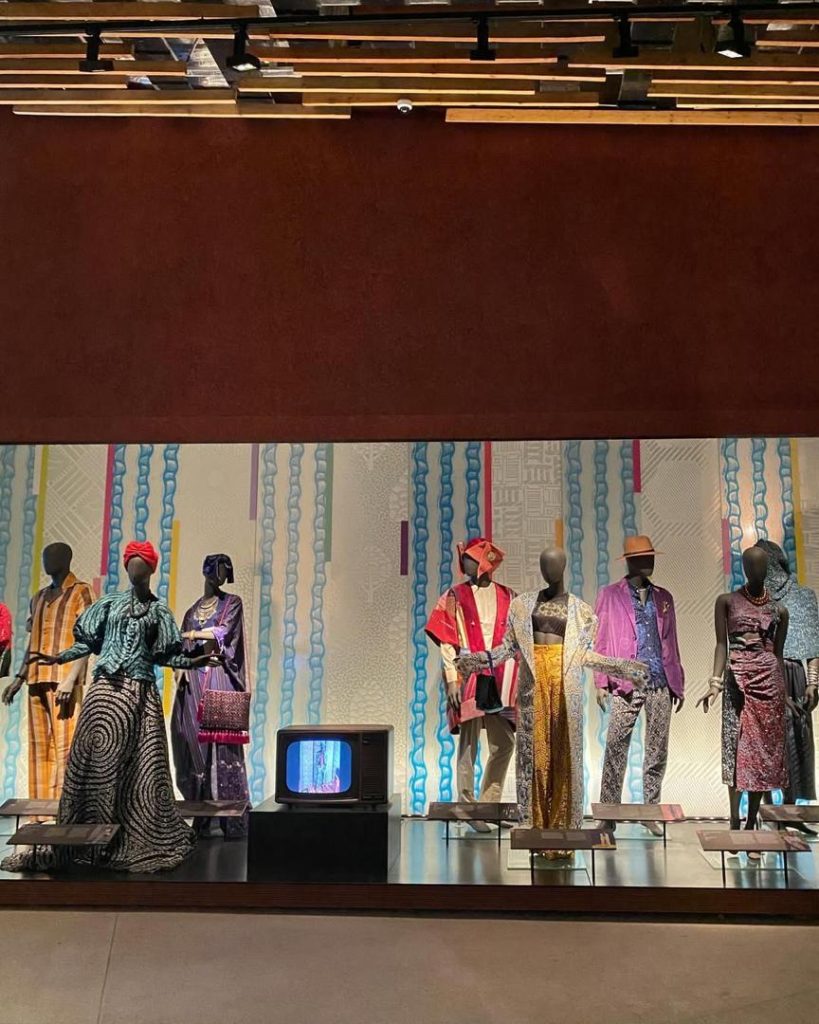
Indeed it is all of that and more, but for me, first and foremost I try to not refer to it as a “Museum”, that diminishes the possibilities I see in this centre, and couple with the fact that Museum by their very nature, has a very colonial heritage, which I am trying to distance a space that was meant to be an heritage centre, i.e a space that is serious about decolonial work, turning the gaze upon ourselves, the exhibition is more like a shrine for me, an immersive sanctuary that shines the light on us, our origin story, our mythology, our history, our craftsmanship and creative fervor, our innovative ways of making the new out of the old, and of imagining a new futures for ourselves. All of these anchor every Yorùbá person that comes in there to something they can recognize themselves within, and any indigenous person gets inspiration from it, while all foreigners get to know a little more about what makes Yorùbá culture such a rich and important culture in a modern world.
You’ve been deeply involved in shaping the vision and curation of the Centre. How were you part of the process of selecting and curating the cultural pieces and stories now on display?
I am actually not part of the curatorial team, even though I had worked closely with Ex Governor Akinwunmi Ambode as a kind of advisor on the general cultural politics of Lagos, which led to the renovation and building of new cultural rejuvenation we’re now
witnessing across the city. My role is mostly concerned with how to turn a mere building into a socially connected and globally important cultural centre.
The J. Randle Centre has hosted a wide range of events—from Design Week Lagos to Yoruba Games, Ọjà Àṣẹ to Yorùbá Philosophy Night, Lagos Fashion Week to Tacha’s Guinness World Record, and even film premieres and raves to mention just a few. How do you manage to accommodate such diverse events under one roof? What does the planning and logistics behind that look like?
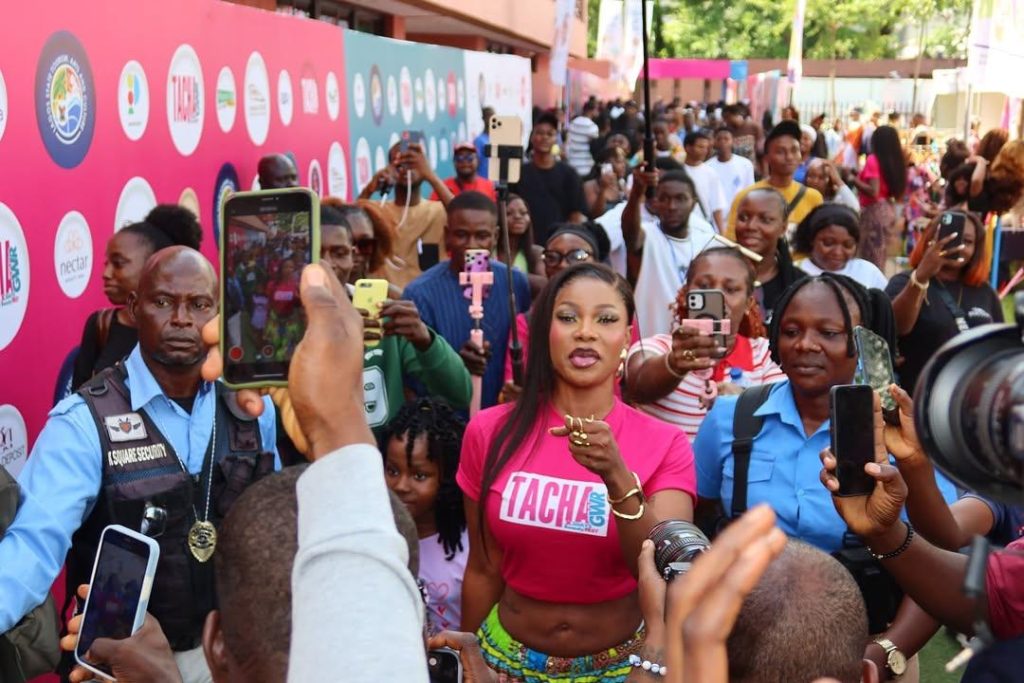
The thing is that I love collaborations, and I sincerely think that the future is inevitably collaborative. I see Lagos as a very inspiring city that by its nature, has a fascinating way of subliminally pulling together various and varying currents, the amount of creative people and creative ideas that comes on my table on a daily basis is nothing short of wonder, the fact that I am very open to suggestions and allow creatives to come in to disrupt our own thoughts on what we think a Lagos Cultural Centre could be. This has opened up the space in ways we would never have imagined, the centre has become a sort of open canvas and till tomorrow, creatives, event planners, artists, designers, and producers are discovering new ways to use the centre, and I particularly fi nd that very enriching and exciting.
However, I understand why some venues try to create restrictions and some level of rules to limitate what people can do in their venues, because I can tell you that due to our level of openness, myself and my team are always thinking on our feet, we can have at least 5 group meetings in my office in a week, and even during that meeting, people are jumping in and out attending to producers or planners, my team is working extra hours, and I am very proud of them and the level of dedication they’ve poured into this with me and my vision, we are open at least 6 days a week and sometimes all week, and even overnight or till very late. This December period is a whole different ball game entirely.
There’s also a Yorùbá School at the Centre, which many people might not know about. What inspired that initiative, and what kind of impact are you seeing so far?
When I was developing the social and business model for JRC, I came up with a six pronged concept I refer to as the Yorùbá CREATE, which is a model i borrowed from The QDance Center, the acronym for Community engagement, Research Lab, Education, Artists Support, Technology and Entrepreneurship, these are the pillars upon which I base all that we do at the centre, so for me I have already noted long ago that the Gen Zs and even at higher degree, the Gen Alphas are beginning to lose their tongues entirely to English language, that is, there are great number of young Nigerians who only speaks English and nothing else, and since I studied French and the Alliance Francais before going further to study in France, I decided to set up a similar structure where people can have a conducive environment where they can learn Yorùbá language in much more structured manner, and aside from summer classes, we have developed a curriculum for what we call the Yorùbá School, which also includes arts and crafts as well as dance classes. Soon we shall add swimming classes to that.
The Centre’s online visibility has grown rapidly. How has social media contributed to that rise, and how intentional is your team about storytelling in the digital space?
Very intentional. Technology is a core pillar of our Yorùbá CREATE model. We use it to extend Yorùbá culture into new temporalities and audiences—to provoke what I call ancestral return and futurist re/membering.
When I resumed as the Centre’s CEO, I was briefed that photography wasn’t allowed in the exhibition. I smiled—and immediately overturned that rule. I wanted Gen Z to feel ownership. They are my primary audience; others follow naturally.
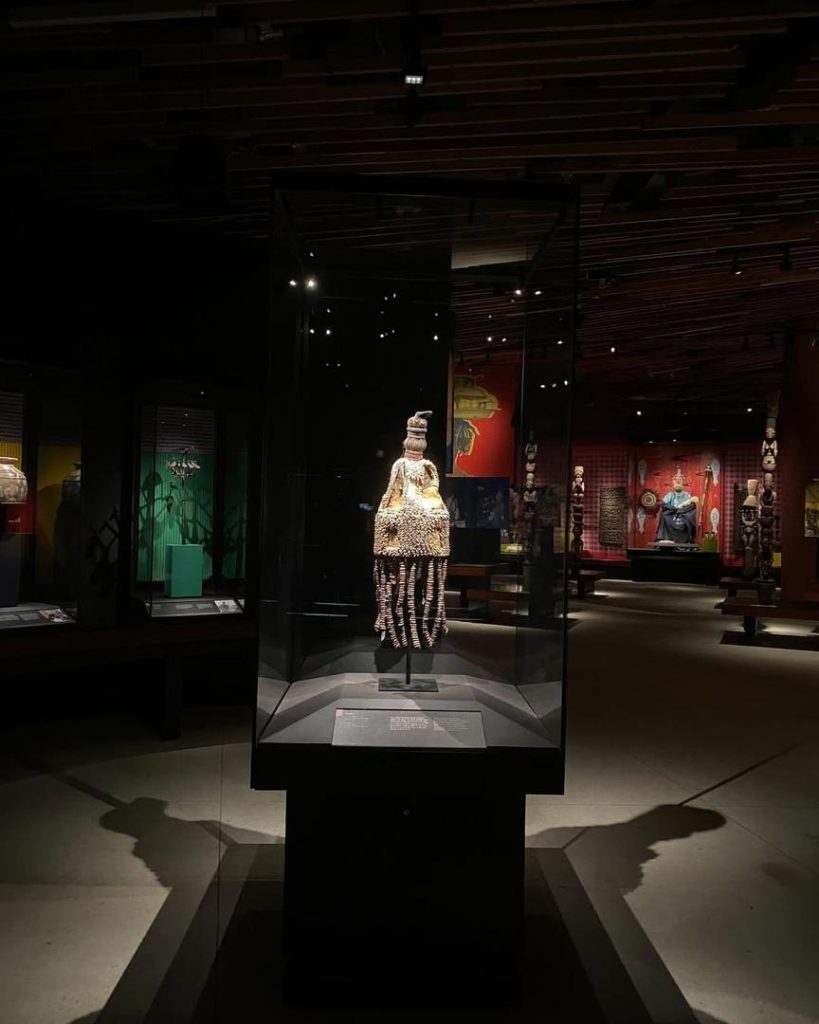
Coming from performance, I refused to treat the Centre as a sacred mortuary for static and mute objects. The artefacts had to perform, and had to speak to a new generation of Nigerians, that’s why my team is mostly younger than me, and we use tools we’re fl uent in. Visitors are naturally in awe when they come to the centre and very quickly TikTok and Instagram were fl ooded with images of JRC, and every other day we were going viral. Social media helped us reach 20,000 visitors in our fi rst 100 days and over 350,000 by the end of our Year Zero.
Your international experience from studying and working in France to touring globally has clearly infl uenced your approach. In what ways have your travels and creative background shaped how you now lead the Centre?
There’s no doubt that my international exposure has played a signifi cant role in how I understand the power of culture, as perhaps the greatest soft power we possess as a people with such deep heritage. Becoming an artist at the borders of multiple cultures, some of which I’ve adopted as my own, taught me the importance of investing in our culture. Nothing happens by chance: how engagements are designed, how budgets are used as practical tools, how curating and programming refl ect broader socio-political intentions, and how consciousness itself is shaped, how people are moved emotionally and mentally from one position to another. These are processes I’ve worked through extensively as an artist, curator, and community organiser, both locally and internationally. What the J. Randle Centre now offers is a scale and possibility I had long imagined but never quite had access to before. From here, there is so much more that can be achieved.
Let’s talk about Afropolis Lagos, it’s become one of the Centre’s standout events. How did it start, and what does it represent for you and for Lagos?
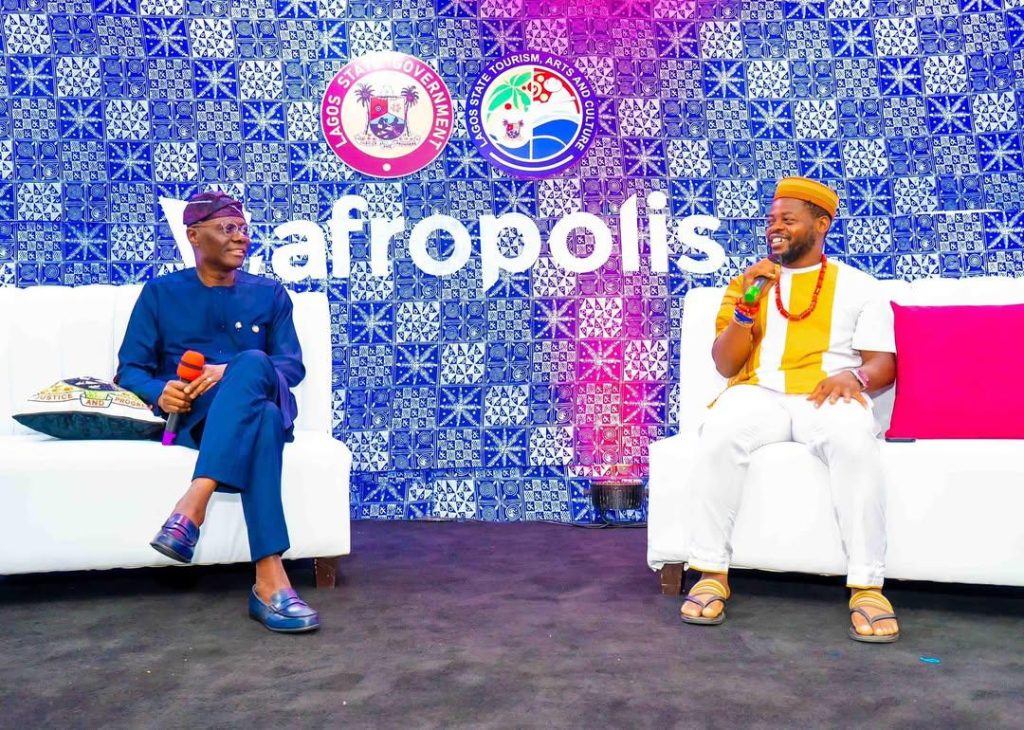
Afropolis emerged from a deep dissatisfaction with how art festivals are typically organised. It began in 2017 as dance GATHERING, driven by a desire to bring together dancers, philosophers, musicians, DJs, architects, poets, historians, scholars—dreamers and doers of all kinds—primarily from Africa and the diaspora. The idea was simple: gather for one or two weeks in Lagos, show up fully, remain present, and share space. On the fi nal weekend, we would close down Broad Street and present the ideas, performances, and collaborations that had emerged. After COVID-19, the project evolved into Afropolis and became itinerant, following the same process. In 2021 we were in Barcelona, in 2022 Marseille, in 2023 Lyon, and by 2024 we returned to Lagos. That return became a foundation for my role at the J. Randle Centre, grounding Afropolis fi rmly within the city it was always meant to serve. Our next edition is already in preparation for 1st – 6th April 2026.
You also run QDance Company, which continues to tour and create. How do you balance being an artist and running a cultural institution? Do the two ever overlap in unexpected ways?
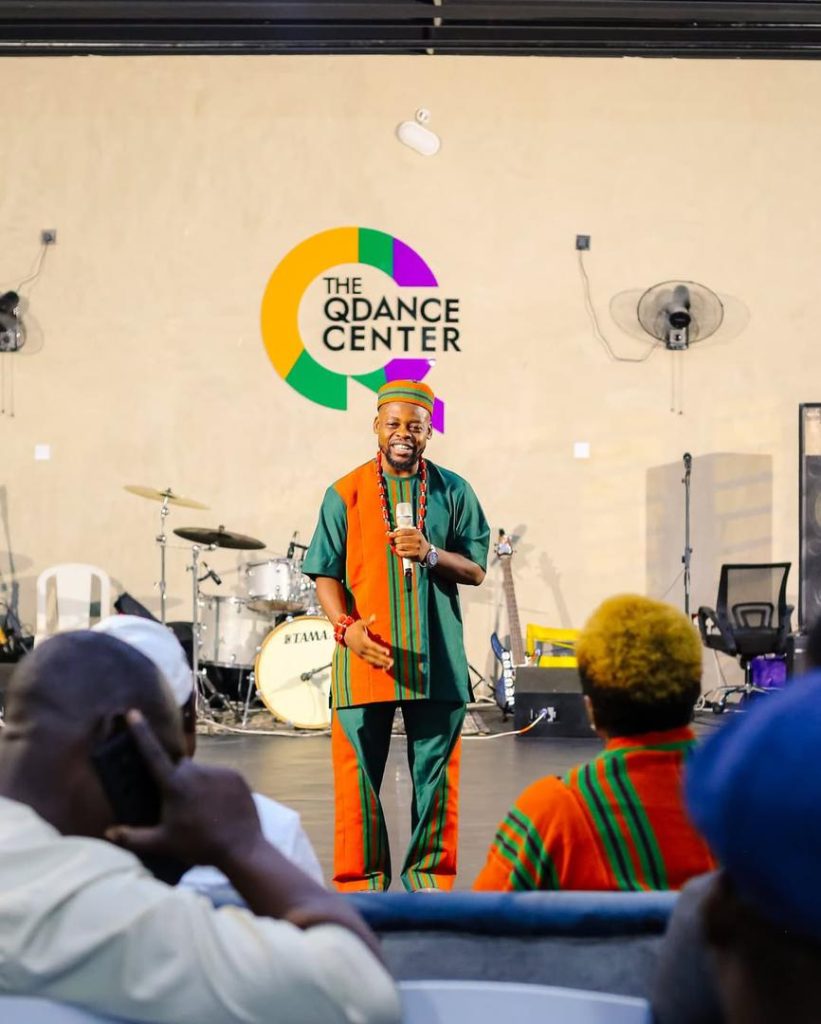
My work as a choreographer with QDance Company continues to be supported by my team at the QDance Center also in Lagos Island, so there is a synergy. Dance is life for me, I don’t see myself stopping anytime soon, even though I’m less frequently on stage now. Working with dancers and creating for performance continues to give my thinking a sense of vitality. I’m most productive creatively when I’m in motion, both physically and in spacetime. In many ways, dance continues to directly benefi t my role at the J. Randle Centre, especially as we explore indigenous ways of imagining the future. The masquerade in Yorùbá cosmology is a kind of multimedia cyborg—delivering messages between the world of the living and that of the
ancestors—and it’s no coincidence that performance is the the medium through which that is done.
Lagos is a fast-moving city with endless creative activity. What has been the most fulfiling part of directing the Centre so far and what’s been the toughest challenge?
Lagos inspires me in ways I don’t yet have the language to fully express. The most fulfi lling part of my work at the J. Randle Centre is precisely the fact that it is a strange and unique entity—neither a conventional government agency nor a private institution, but something hybrid, something still becoming. It is a form that is not yet fully fixed, and as a fast-moving thinker myself, I thrive in that liminal space—in the cracks, the unfi nished images, the broken chords, and at the threshold.
That ambiguity has given me the freedom to experiment very practically. I am quick to retract a misstep and just as quick to accelerate an idea when I sense it works. That elasticity is rare. The challenges of working with the government, honestly, don’t weigh on me as much as one might expect, because it is precisely through those challenges that I’ve learned the most. When I took on this role, I was largely naïve about navigating government structures and the politics of culture in Lagos. But in just one year, the amount of learning has been immense, and I’m genuinely excited about what that knowledge now makes possible in the year ahead.
As we approach Detty December, what should Lagosians and visitors expect from the J. Randle Centre this festive season?
The J. Randle Centre is fast becoming one of the most important cultural destinations in Lagos, and we are preparing for what I believe will be the biggest Detty December yet. This is largely because of the Eyo Festival taking place on December 27. The Eyo Festival—also known as the Adamu Orisha Play—does not happen every year. It is staged only in honour of an illustrious son or daughter of Lagos, and the last edition was eight years ago. When it happens, it draws thousands of people into Lagos Island.
Coinciding with this moment, we will be unveiling the tallest monument in Lagos—an Eyo monument created by the remarkable scrap artist Dotun Popoola. It will be unveiled by the Governor, the Oba of Lagos, and other distinguished dignitaries on the eve of the festival, followed by a concert featuring Vector the Viper, himself a proud indigene of Lagos Island.
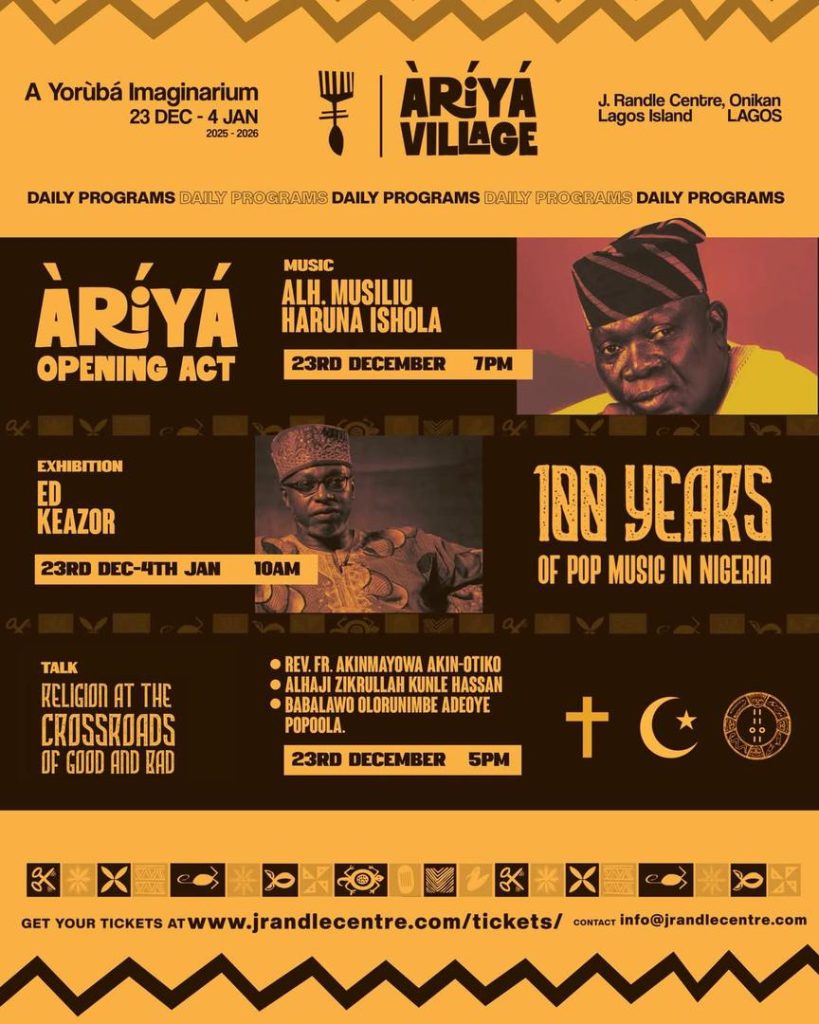
Beyond that, we are hosting a 13-day festival titled ÀRÍYÁ VILLAGE, where we will transform the entire Centre into what we call a Yorùbá Imaginarium—a cultural portal grounded in Yorùbá aesthetics, a luminous universe where nostalgia meets futuristic play. If Àríyá Village isn’t part of your Detty December, then truly, you are not outside.
Looking ahead, what do you hope the Centre becomes in the next five years for Lagos, for Yorùbá culture, and for the next generation?
In the next five years, I hope we will have succeeded in making one thing undeniably clear: culture is an asset for Nigeria especially. Culture is the bedrock of all development. Nothing truly works unless it is culturally grounded.
I see the Centre becoming a space where we actively invent new visual languages, new political imaginaries, new forms of entrepreneurial thinking, new tastes in art and design, new curricula for educating a new generation of change makers, and fresh understandings of medicine, philosophy, technology, and science. This is necessary because much of our social reality as Nigerians—and as Africans more broadly—demands a fundamental rethink. The colonial process was never truly undone after independence, and we are still living with the consequences of that violent derailment.
The J. Randle Centre, to me, is a kind of spaceship; one capable of carrying us toward the futures our ancestors had already prepared us for before that interruption. It is a space for healing, reimagining, and realignment. And I believe that if we stay faithful to this work, we will not only remember where we come from, but finally arrive where we were always meant to be.
Closing Note
Qudus Onikeku is proving that heritage doesn’t have to sit behind glass. Under his direction, the J. Randle Centre has become a space where the Yorùbá story is lived, danced, spoken, and reimagined every day. With Afropolis, Yorùbá School, and a calendar full of events, he’s showing that culture is a “verb” and not a “noun” and it’s a rhythm still moving through us.



Leave a Reply