


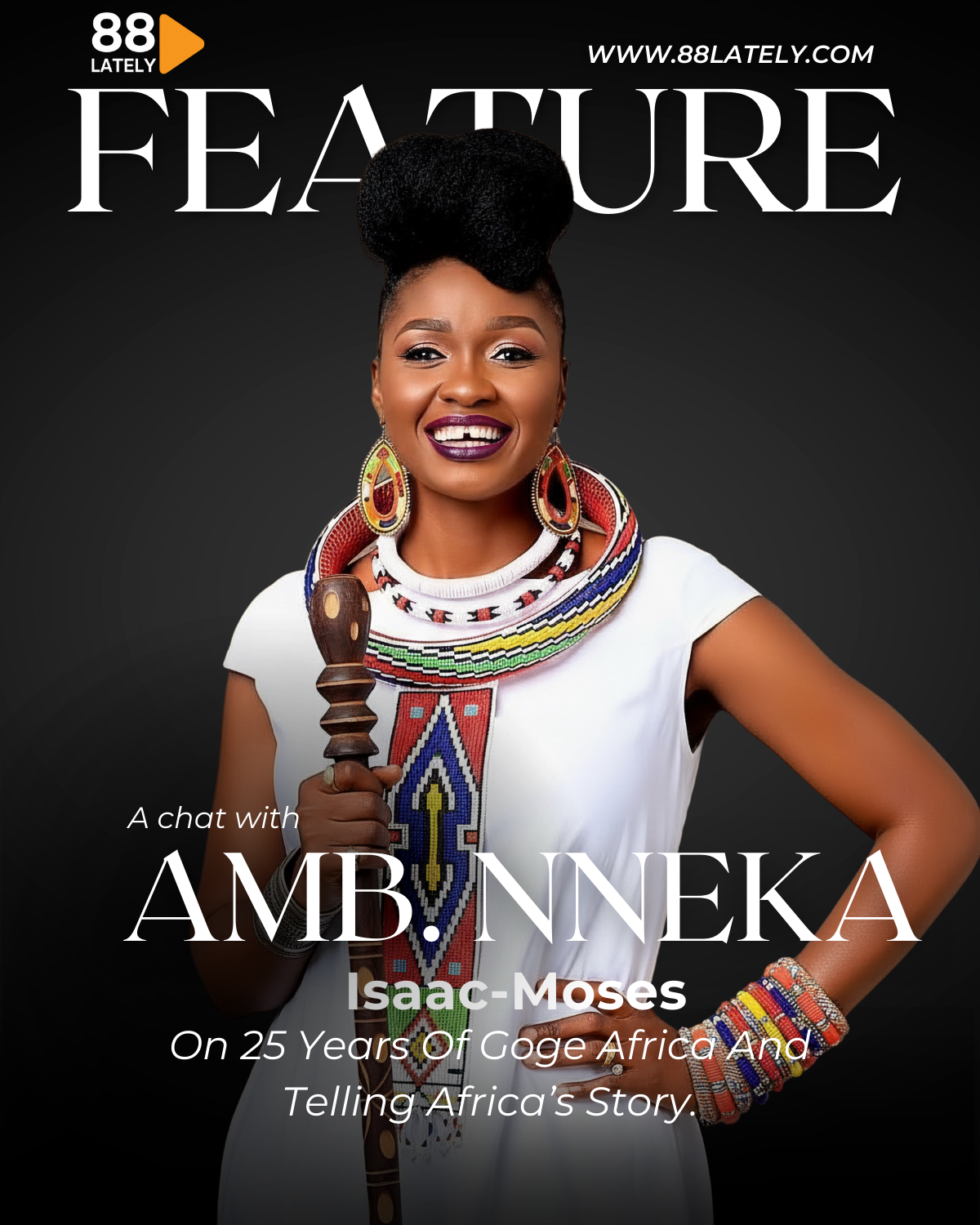
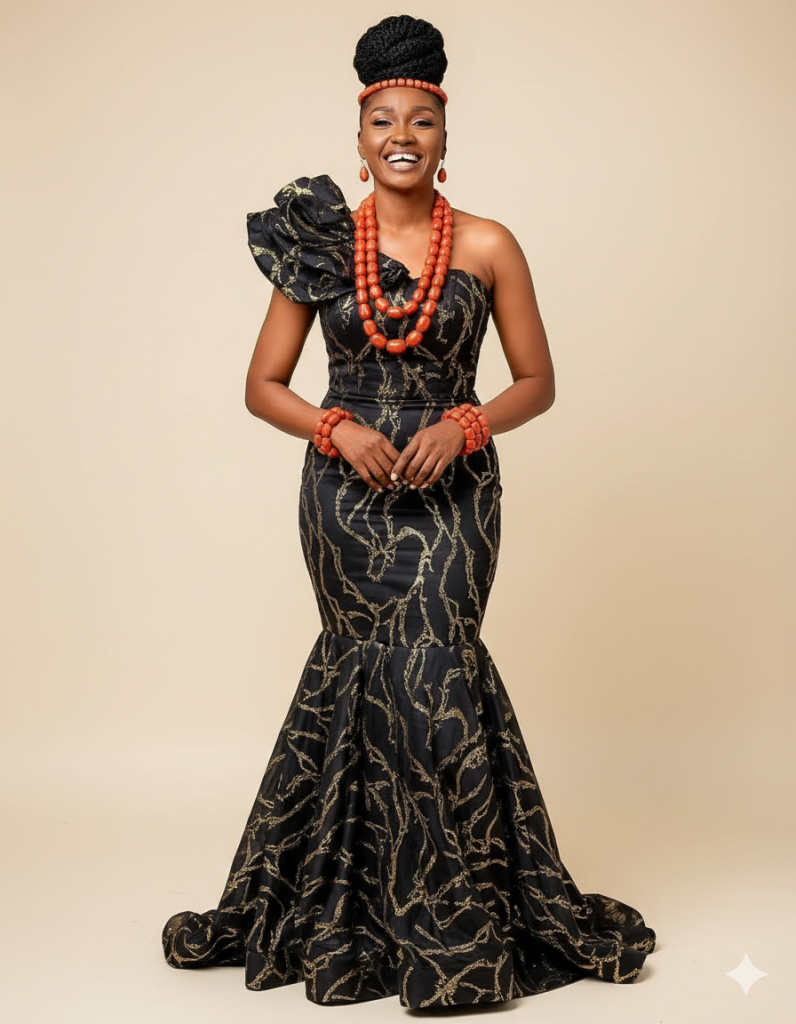
For more than two decades, AMB. Nneka Isaac-Moses has been one of Africa’s most consistent and respected cultural storytellers. As Co-Founder and Managing Director of Goge Africa, she helped build one of the continent’s most enduring cultural and tourism media platforms, a brand that has shaped how millions of Africans see themselves, their history, and their place in the world.
From her early fashion house in Surulere to becoming a cultural entrepreneur, tourism advocate, “heritologist,” and custodian of African identity, Nneka’s career has been rooted in one central belief: culture is not decoration — it is identity, economy, memory, and power.
This belief has become even more urgent in recent times.
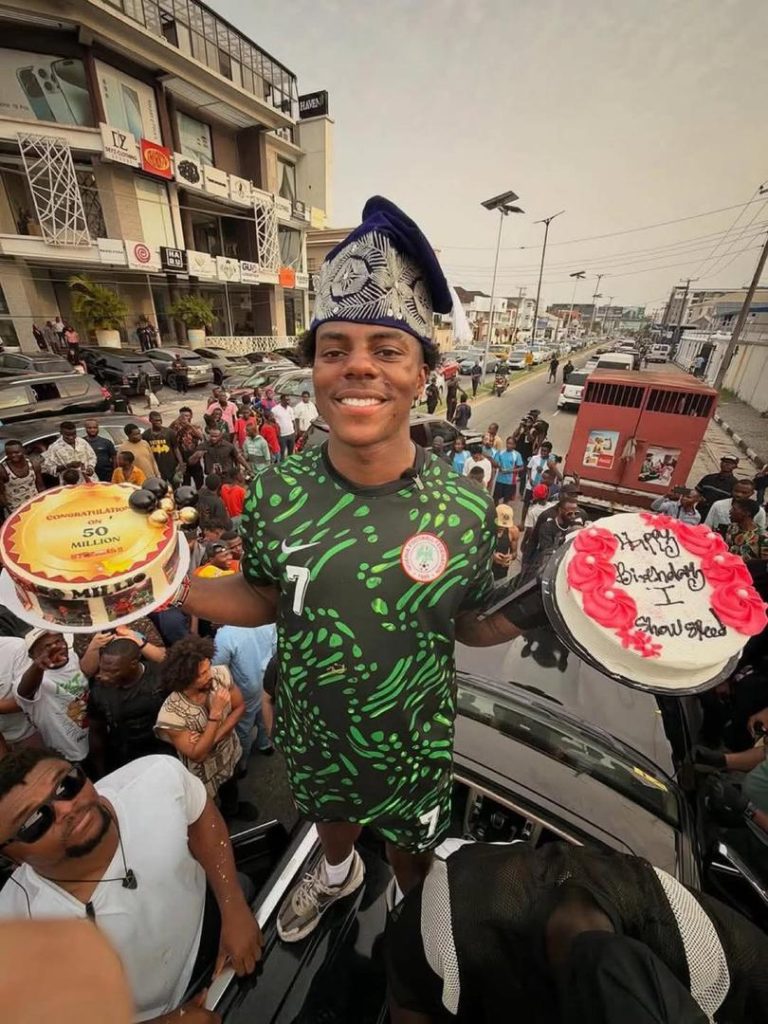
When popular global streamer IShowSpeed visited Lagos as part of his African tour, online reactions revealed something uncomfortable. While other African cities presented a deliberate blend of contemporary urban life and deep cultural expression, Nigeria and Lagos in particular appeared disconnected from its own heritage. One would wonder how a city with over 140 traditional festivals, hundreds of cultural events, sacred sites, historic communities, and nature reserves could host a global visitor without offering even a glimpse of its indigenous culture.
The moment sparked debates, think pieces, and criticism. But for Nneka Isaac-Moses, it must have reflected a much older problem, one she has been working against for 25 years.
We sat with her for a reflective and forward-looking conversation on Nigerian identity, cultural visibility, the lessons of experience, and what it will take to tell our stories better.
Goge Africa recently marked 25 years, an extraordinary milestone. When you think back to 1999, what made you start a culture and tourism show at a time when such shows were not a thing? You literally pioneered a whole industry.
Looking back to 1999, what made you start a culture and tourism show when it wasn’t a thing?
In 1999, Nigeria was at a critical turning point. As a nation emerging from years of military rule, there was a strong need to reconnect with who we were beyond politics and survival. At the time, television content largely ignored our indigenous cultures, festivals, and communities, focusing instead on foreign or purely entertainment-driven narratives.
Isaac and I did not start Goge Africa because there was a ready market for culture and tourism. We started it because there was a glaring absence. Through our travels across Nigeria and Africa, we realised that what was often dismissed as “local” was in fact our greatest asset. We felt a responsibility to document living cultures—while they were still practiced, understood, and owned by their communities. In that sense, Goge Africa was born out of conviction, not trend.
In light of recent conversations sparked by IShowSpeed’s visit to Lagos, many people realised how disconnected urban Nigeria can feel from its own culture. People say, “It’s because it was Lagos,” yet Lagos alone has over 140 indigenous festivals, traditional communities, sacred sites, and centuries of history. From your perspective, how do you think we got to a point where Nigerians don’t know or interact with their own culture and heritage?
Cultural disconnection is the result of years of gradual neglect. Urbanisation, colonial education systems, religious extremism, and weak cultural policies all contributed to the erosion of everyday cultural engagement. Development was often framed as something that must replace tradition, rather than grow alongside it.
Even in Lagos—with its over 140 indigenous festivals and deep historical layers—culture became invisible because it was no longer taught, protected, or properly integrated into public life. Sacred sites were turned into real estate, festivals became one-off events, and cultural knowledge was rarely documented. When culture is not institutionalised, people grow up without reference points, and eventually lose connection to what surrounds them.
Social Media and AI have become major parts of our lives and key instruments of disruption. How would you say this has affected the culture and tourism industry? Would you say it has been more negative or positive?
Social media and AI are tools—and tools are only as effective as the intention behind them.
On the positive side, they have democratised access and visibility. Cultures that were previously ignored can now be seen globally. AI offers enormous potential for archiving, language preservation, and immersive tourism experiences.
However, the risk lies in oversimplification. Culture is increasingly reduced to content—short clips stripped of meaning and context. Algorithms reward speed, not depth. Our position has always been that technology must serve culture, not dilute it. When used intentionally, digital tools can amplify authenticity rather than replace understanding.
In your over 25 years experience, what have been your biggest challenges and your biggest wins so far and what kept you going over the years?
Our biggest challenge has been sustainability. Cultural work in Nigeria has long been underfunded and undervalued, often treated as optional rather than essential. There were many years when Isaac and I personally funded projects, persisted through rejection, and operated without institutional support.
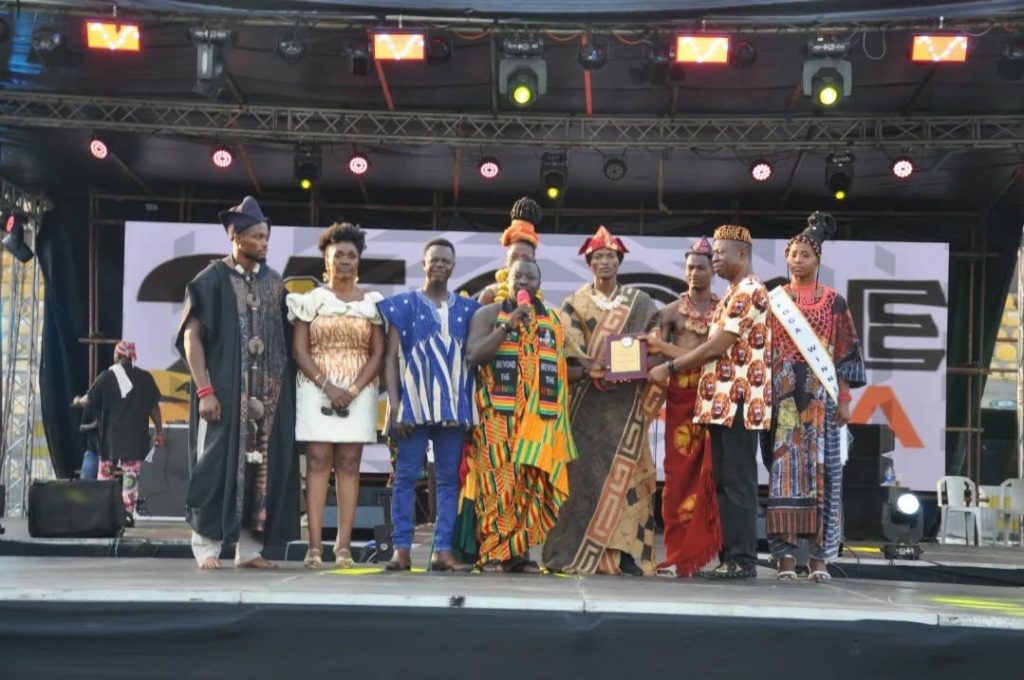
Our biggest win is continuity. For over 26 years, Goge Africa has documented cultures across Nigeria and Africa without interruption. We have built an archive that did not previously exist and preserved stories that might otherwise have disappeared. What kept us going was conviction—we knew the work mattered, even when recognition was slow.
Over 25 years of travelling across Nigeria and Africa, what has that experience taught you about the role culture plays in shaping national identity and how a country is perceived globally?
Culture is a nation’s most powerful, yet quiet, form of diplomacy. Long before tourism campaigns or trade agreements, culture shapes how a country is perceived.
Our travels have shown us that countries that invest in their cultural memory project confidence and clarity. Where culture is fragmented or ignored, national identity becomes fragile. You cannot outsource identity, and you cannot command global respect without cultural coherence.
You studied English at UNILAG and ran a thriving fashion house in Surulere that produced costumes for films and events before Goge Africa. How did your grounding in language, aesthetics, and visual storytelling prepare you for the work of cultural documentation and preservation?
My grounding in language, fashion, and visual aesthetics shaped how I approach cultural documentation. Studying English sharpened narrative structure and critical thinking, while running a fashion house grounded me in symbolism, texture, and visual storytelling.
Cultural documentation requires more than recording—it requires interpretation. Those foundations allowed me to approach culture with discipline, respect, and creative clarity, translating meaning without distortion.
Goge Africa has gone beyond television into tourism development, youth training, women empowerment, and heritage projects. Looking back, what impact would you say the platform has had in reframing Nigerian and African narratives locally and internationally?
Goge Africa has helped reposition African culture as knowledge, not novelty. Locally, we have restored pride by showing communities the value of their own heritage. Internationally, our work has provided context and reference material that challenges stereotypes.
Beyond television, our work in tourism development, youth training, women empowerment, and heritage projects has contributed to reframing Africa from a place of spectacle to a continent of civilisation, memory, and innovation.
One striking thing about your work is that it doesn’t chase nostalgia — it treats culture as living, evolving, and relevant. Why was it important for you to present culture as something dynamic rather than frozen in the past?
Because culture that is frozen becomes irrelevant. Living cultures adapt, respond, and evolve while still holding memory. Presenting culture only as nostalgia disconnects younger generations.
Our intention was to show culture as something you can live with—wear, travel through, learn from, and innovate around—while still respecting its roots. Preservation does not mean resisting change; it means guiding change responsibly.
You and your husband, AMB. Isaac Moses, have built Goge Africa together for over two decades. What has that experience been like for you? Can we say it has been the secret sauce to Goge Africa’s success and staying relevant over the decades?
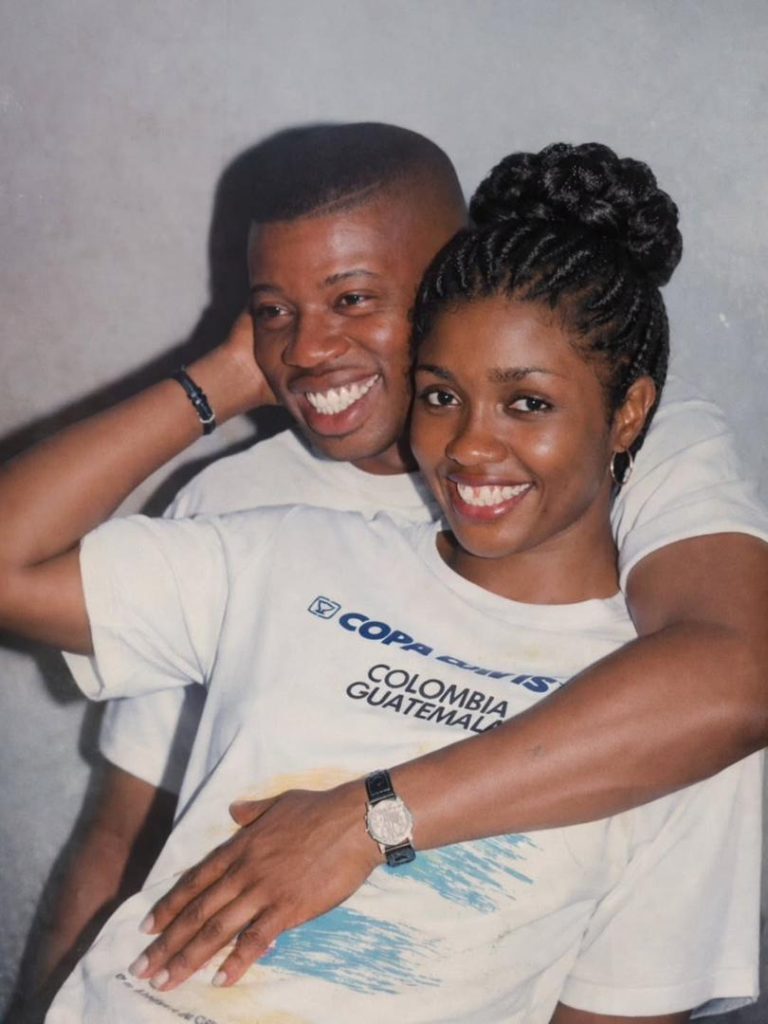
Yes. My husband and I built Goge Africa as partners in vision, purpose, and execution. Isaac brings depth in storytelling, voice, and creative direction, while we share strategic alignment and long-term thinking.
Working together has required trust, resilience, and mutual respect. It has not always been easy, but that alignment has been central to Goge Africa’s ability to stay relevant and consistent for over two decades and counting.
Egypt generates about $15.3 billion annually from tourism, while Nigeria on the other hand does about $2 billion. That is a staggering difference of over 660%. Based on your experience, what do you think Nigeria (government and stakeholders) needs to do differently to drastically increase revenue from tourism while promoting our culture, gaining global attention and telling our story under the umbrella of tourism?
Nigeria must move from potential to policy. Tourism cannot thrive without structure.
This requires:
• A clear national tourism strategy
• Infrastructure and access
• Security and perception management
• Cultural mapping and protection
• Professional storytelling
• Strong public–private collaboration
Countries like Egypt treat culture as economic infrastructure. Nigeria often treats it as decoration. Until culture is positioned as a serious economic asset, tourism revenue will remain limited.
As Goge Africa steps into a new chapter with projects across Africa and the diaspora, what is the way forward? What role do you believe the next generation must play in protecting, interpreting, and projecting Nigerian culture to the world?
The next generation must move from consumption to stewardship. They must document digitally, innovate responsibly, and build systems rather than chase trends.
Culture needs technologists, archivists, curators, storytellers, and policy thinkers. The future of African culture will not be preserved by nostalgia—it will be preserved by intention and structure.
What would be your advice to young people coming into the culture and tourism industry in different capacities like tour guides, experience curators, storytellers etc From the perspective of a pioneer and the OG before IG that you are.
Learn before you brand. Respect before you remix. Depth before virality.
This industry requires patience, research, and responsibility. If you do the work with integrity, relevance will follow. If you do it only for attention, culture becomes the casualty.
Bonus
If you were to plan a Nigerian culture and tourism tour for an international streamer visiting Nigeria, what would be the itinerary?
Days 1–2: Lagos
• National Museum/Yoruba Center
• Afro-Brazilian quarters
• Freedom Park or The Shrine
• Indigenous food trail
• National Art Theatre historic tour
• Nike Art Gallery Experience
• Lekki Conservation Center
• A visit to the Kosoko Palace
• A boat cruise to showcase the blue economy in Lagos.
Day 3: Ogun State
• Adire artisanship immersion
• Sacred groves and oral storytelling
• OOPL Tour
• Olumo Rock Tour
Days 4–5: Osun State
• Osun Sacred Grove
• Guided priest-led cultural immersion
• Contemporary art spaces
• Cultural Tour of Ife
Day 6: Benin
• Royal palace historic tour
• Bronze casting guilds/Art Market
• Bead Craft Experience
• Heritage Fashion Experience
Day 7: Enugu
• Ngwo Pyne Forest
• Ohumn Cave & Water fall
• Center For Memories
• National Museum Enugu
• Palm Wine Tasting, Abacha and Okpa Street food experience.
Day 8: Northern Nigeria
• Durbar culture or ancient city tour
• Culinary heritage experience
• Kano Dye Pit
• Leather Tannery
Would add cultural dance lessons with state troupes where possible.
For us, it is not about a highlight reel, but a contextual journey that builds understanding. I also recommend Nigerian cultural festival tours—they run all year round and offer the most authentic way to experience the depth, diversity, and living spirit of our culture.
OUTRO
From Surulere’s fashion studios to cultural corridors across Africa and the diaspora, Nneka has spent her life showing us how culture is not optional to national identity but foundational. It shapes how we see ourselves and how the world engages with us.
Today, as conversations around tourism, soft power, and global visibility grow louder, her work offers both a roadmap. Nigerian culture does not need reinvention instead we need to navigate reintroduction, storytelling, recognition, investment, documentation, structure and pride.
Twenty-five years on, Goge Africa remains more than a show. It is an archive, a classroom, a mirror, and a call to action.
And as AMB. Nneka Isaac-Moses looks ahead, one thing is certain:
Nigeria still has stories to tell and culture remains the clearest language through which the Nigerian identity can truly be understood.



Comments (2)
Thelma Obazesays:
February 18, 2026 at 5:46 pmKudos to Mr and Mrs Isaac Moses for the vibrance and vigour they infect Africa and the world with everytime.. Cheers to another 25years
88latelysays:
June 11, 2026 at 10:27 amKudos to them. The real OGs before IG!