


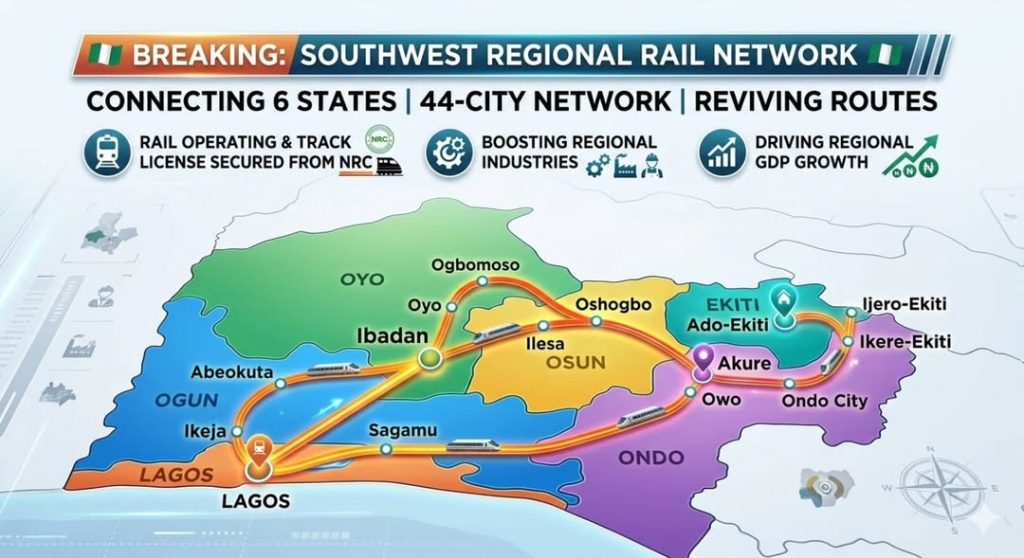
For years, conversations around transportation in Nigeria have largely centered around traffic, damaged roads, rising logistics costs and the endless movement of trucks across major commercial routes. But a newly secured provisional rail operation and track access licence from the NRC by the South-West Development Commission is geared towards a different direction — the possibility of reconnecting South-West Nigeria through rail.
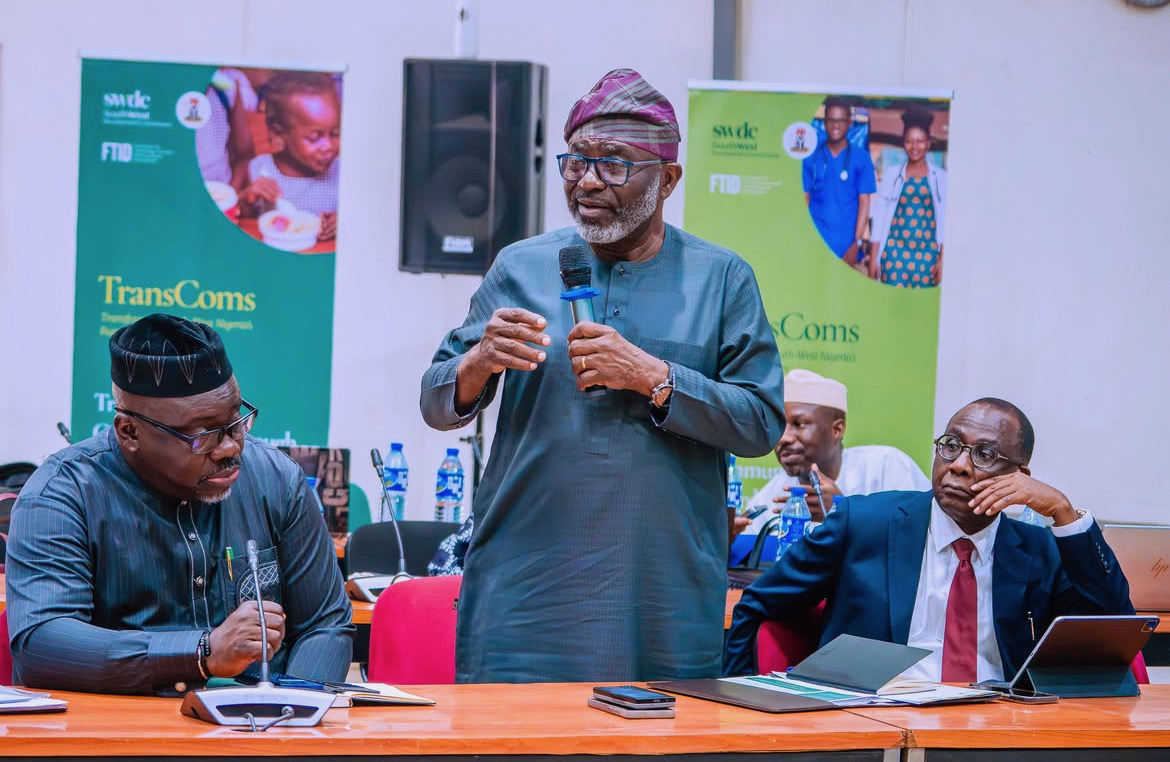
Recently, the South West Development Commission secured a provisional rail operating licence from the Nigerian Railway Corporation, giving it approval to begin developing rail operations across the South-West region.
The initiative, known as the South-West Rail, Agro-Industrial & Logistics Platform (SW-RAIL), is expected to connect Lagos, Ogun, Oyo, Osun, Ondo and Ekiti States through passenger and freight rail systems designed to improve movement across the region.
But beyond transportation, the project is being positioned as an economic strategy.
According to officials involved in the initiative, the rail system is expected to help connect farms, factories, ports, industrial hubs and commercial centers while reducing pressure on roads and improving the movement of goods across the South-West.
South West Development Commission Managing Director Charles Akinola described the approval as “the green light to rebuild the Southwest’s economic spine on rail.”
That statement alone reflects the scale of ambition surrounding the project.
The South-West remains Nigeria’s busiest economic region, but it is also one of the most congested. Businesses across Lagos and neighboring states continue to struggle with expensive logistics, traffic delays, port bottlenecks and rising transportation costs that affect everything from food supply to manufacturing.
The hope is that a stronger rail system could help reduce some of those pressures while improving regional trade and long-term economic growth.
The announcement also comes at a time when rail transportation is gradually becoming a larger national conversation, especially with recent investments into Lagos rail infrastructure and expanding discussions around modernising Nigeria’s transportation systems.
For many Nigerians, the biggest question now is simple: can this project finally become one of the rail plans that truly transforms movement, business and commerce in the country?
Written by Folasade Abimbola






Leave a Reply