



Nigerian actor, film producer and director Zikky Alloy has spent years bringing stories to life on screen, taking on different roles both in front of and behind the camera. From acting in productions such as Tales of Eve, Squatterz, Ratnikand Legal Clinic to directing and producing his own projects, he has built a career that allows him to approach filmmaking from multiple perspectives.
His latest project, Anwuli, marks another important step in that journey. Produced by Zikky Alloy and directed and co-produced by Victor Eyike, the film has been selected for the 15th edition of the Africa International Film Festival (AFRIFF) 2026. An exclusive screening is also scheduled for November 6, 2026, with plans for a nationwide screening tour and participation in international film festivals.
Anwuli tells the story of Mma, a Lagos tailor, and her husband, Abuoma, whose family struggles with poverty while caring for their seven-year-old daughter, Anwuli, who lives with sickle cell disease. As the family battles financial hardship, differing beliefs about the child’s illness create tension that eventually leads to devastating consequences.
Beyond its family drama, the film explores the challenges faced by families dealing with sickle cell disease, the consequences of misinformation, and the strain that financial hardship can place on relationships.
For Zikky, whose career spans acting, directing and producing, Anwuli also offers an opportunity to contribute to conversations that matter while telling a deeply human story.
We spoke with him about the film’s journey to AFRIFF, his years in the Nigerian film industry, moving between acting and producing, and his vision for the stories he wants to tell.
Congratulations on Anwuli being selected for AFRIFF 2026! What was your first reaction when you received the news, and what does this selection mean to you as a filmmaker?
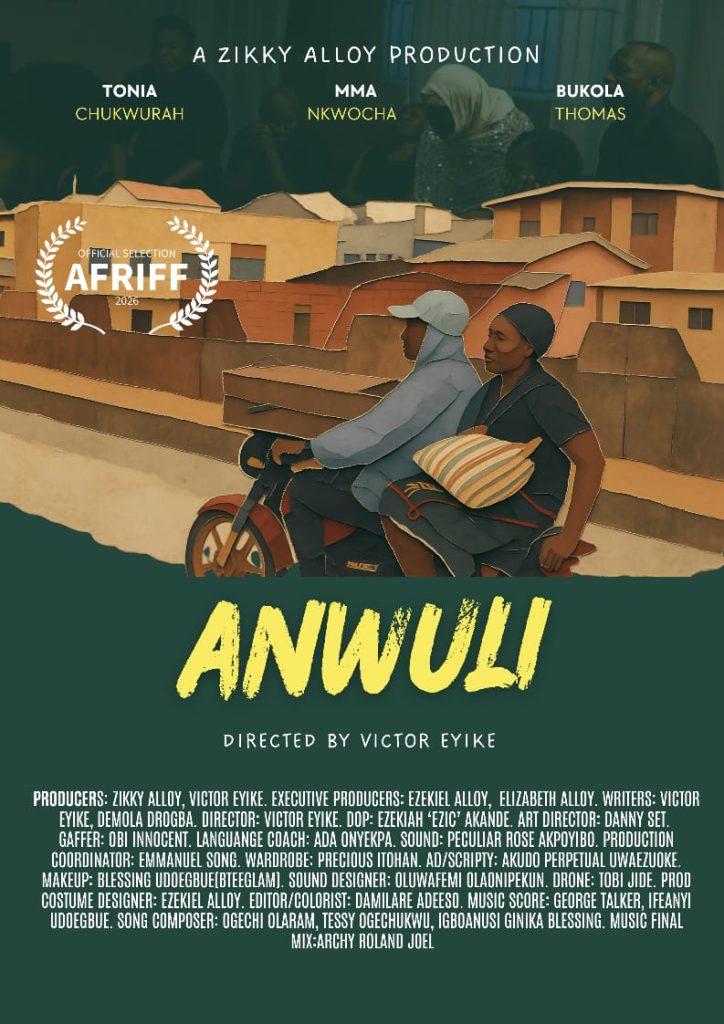
I was very happy when I got the news that Awuli was selected because we generally thought that our film would not be selected, as we did not tell a story that met the theme, which was heavily reliant on AI. But thankfully, the results came out, and our film was selected. We’re really excited.
Let’s talk about Anwuli. What inspired the story, and why did you feel this was a story worth telling at this point in your career?
Anwuli was truly inspired by a masterclass organized by Stella Maris-Duru called “The Main Character.” It featured incredible speakers like Mr. Yinka Adebayo, Yaw, Pat Oghre, John Njammah, Ireti Doyle, Saheed Apanpa, Jessica Obasi-Nze, and Wale Adenuga Jr. They ignited something within me! Right after, I reached out to Demola Drogba (a talented writer) and Victor Eyike (a director and writer), and the rest is a wonderful story in the making.
I have a passion for sharing real stories that resonate with everyone, even the locals, allowing them to see themselves in the narrative. The story we created together is something special, and I believe it’s important for people to witness the reality of our experiences.
The film follows a family struggling to care for a child living with sickle cell disease, while poverty and conflicting beliefs make an already difficult situation worse. What conversations do you hope Anwuli will start, particularly around sickle cell disease and how people understand and respond to it?
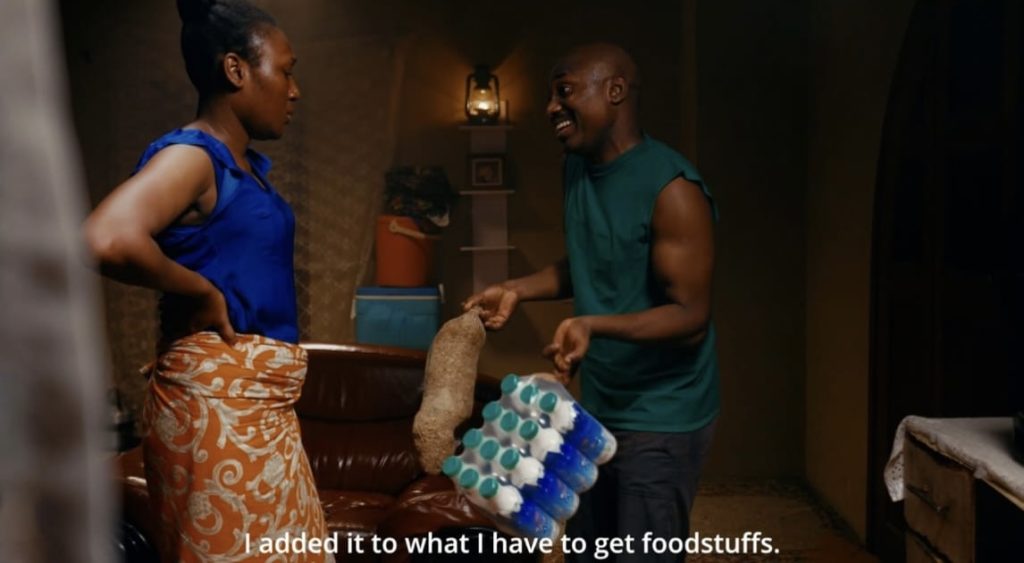
We didn’t just tell the normal story of sickle cell, which always focuses on how the child suffers, but we told a story that focuses on how it leads to a disconnection between parents. How that tiny mistake of having a one-night stand actually led to all the compounded problems that the couple faced until they eventually couldn’t take it anymore.
So, we hope that Anwuli can start conversations around the need to be aware of your genotype and to understand that it’s not only the child who gets to suffer from this, but the entire family also suffers and is burdened by it.
The story also explores marriage, resentment, financial hardship and a woman’s decision to reclaim her life after a devastating loss. How did you approach these different layers of the story without losing sight of the human beings at its
Yes, the story also explores marital resentment and financial hardship. You know how a lot of people can be suffering and begging for help, but nobody wants to help them.That was one other thing we really touched on with the story because we see a character who has a child with sickle cell disease, and she’s always begging for money, but people don’t help. But when something bad happens, suddenly everybody can be there trying to console them.
We also showed how two people can easily disconnect when there is a trial in their marriage, and the trial in this case was the sickle cell child “Anwuli”.
You have worked as an actor in productions such as Tales of Eve, Squatterz, Ratnik, Boomerang and Legal Clinic. Looking back at your journey, how has your approach to acting changed over the years, and which experiences have shaped you the most?
Over the years, working on different productions has shaped me into a more disciplined, resilient, and empathetic actor. Every role has taught me something new, not just about acting but about life and human experiences.
One experience that stands out was being invited to a major production in a part of the country frequently in the news for bombings. I was the lead cast, but the security concerns made it difficult to accept. I took the decision to God in prayer, and I felt reminded that I had been praying for a career breakthrough, and breakthroughs don’t come every day. So, I stepped out in faith, and by God’s grace, we completed the production successfully. When the project was released, it changed the course of my career.
That experience taught me that growth sometimes requires courage, faith, and the willingness to step beyond our comfort zones. It remains one of the defining moments of my journey as an actor.
You have also moved into directing and producing, with projects such as Feud, Stir Up, EH2U and now Anwuli. What made you want to take on more responsibilities behind the camera, and how has that changed the way you understand filmmaking?
My transition into directing and producing came from a growing desire to tell stories beyond the characters I play. As an actor, I focus on bringing a character to life, but behind the camera, I get to see the bigger picture and understand how every department contributes to bringing a story to the screen.
Projects like Feud, Stir Up, EH2U, and now ANWULI have taught me that filmmaking requires vision, teamwork, patience, and a great deal of sacrifice. Taking on these responsibilities has given me a deeper appreciation for the entire filmmaking process and strengthened my belief that storytelling is not just about making movies, but about creating experiences that connect with people and leave a lasting impact.
Having worked both as an actor and a producer, do you find that your experience in one role makes you better at the other? For instance, has producing changed how you approach a character, or has acting helped you make better production decisions?
Absolutely! Being an actor and a producer complement each other. Acting helps me understand the emotional demands of a character and what actors need to deliver their best performances. Producing, on the other hand, has taught me to see the bigger picture, from budgeting and logistics to teamwork and storytelling. Both roles have made me more intentional in my decisions, more empathetic towards my colleagues, and more appreciative of the collaborative effort it takes to bring a story to life.
As an entertainment entrepreneur, you have to balance the creative side of filmmaking with budgets, logistics, distribution and the need to reach an audience. What has been your biggest lesson about the business of making films in Nigeria?
My biggest lesson is that passion alone is not enough; you need strategy, discipline, and the courage to take calculated risks. With my experience on projects like ANWULI, I’ve learned that making a film is only half the journey; getting it to the right audience is another challenge entirely. I’ve also learned to trust God, be resourceful, and keep moving even when the resources don’t match the vision. In Nigeria’s film industry, you must be creative not just in telling stories, but also in finding ways to bring those stories to life and make them reach the people who need to see them.
You trained through the Morocco Omari Acting Masterclass and the Real Time Film Masterclass for Screen Acting in 2019. How important has continued training been to your growth, and what do you think Nigerian actors need to do to keep developing their craft?
For me, acting is a journey of continuous learning. No matter how many roles I play or how much experience I gain, I believe there is always room to grow. Attending the Morocco Omari Acting Masterclass and the Real Time Film Masterclass in 2019 challenged me to look deeper into my craft. I believe Nigerian actors must remain teachable, study human behaviour, and be intentional about improving.Talent may open the door, but continuous growth is what helps you remain relevant.
With Anwuli selected for AFRIFF, an exclusive screening scheduled for November 6, and a nationwide tour planned, what are your expectations for the film’s audience and reach? Are there particular communities or groups you especially hope will see it?
Our expectation for the film’s audience and reach is that we want people to watch it, and there’s a reason why we told the story in local languages: we want people in different regions to watch this film and be able to relate to it all across Nigeria.
The film was told in Pidgin, Igbo, and Yoruba so that everybody can relate to it. And so, the reach is limitless. We hope to do community screenings even after the exclusive screenings, nationwide tours, and more festival screenings to create more impact.
You are looking beyond Nigeria, with plans for Anwuli to participate in international film festivals. What do you think makes a Nigerian story connect with audiences who may not share the same culture or everyday experiences, and how do you hope the film will represent Nigerian storytelling internationally?
One of the things that I believe would make people relate to Awuli, irrespective of borders, especially at the international film festivals we have submitted to, is the fact that it was told in a surreal manner, with a slow-burn approach.
I believe that emotions have no borders. No matter where we come from, we all understand love, sacrifice, family, and the pain of watching someone we love struggle. That is the heart of ANWULI. Although it is deeply rooted in our Nigerian experience, its message is universal. My hope is that when people watch this film anywhere in the world, they will not just see a Nigerian story; they will see a part of themselves in it. Ultimately, I want ANWULI to go beyond winning awards or crossing borders. I want it to touch hearts, challenge perceptions, inspire compassion, and leave audiences with a story they will carry long after the screen goes dark. Because for me, the true power of cinema is not just in the stories we tell, but in the lives we touch and the conversations we inspire.
After years of acting, producing and directing, what kind of filmmaker are you working towards becoming? And for the young actors and filmmakers who want to build careers across different areas of the industry, what would you want them to understand about the journey?
Having worked as an actor, producer, and director, I am becoming a filmmaker who tells stories that mean something to me, stories that reflect our humanity, touch hearts, create awareness, and give a voice to things we often struggle to talk about. With projects like ANWULI, I have come to realise that filmmaking is more than a career for me; it is a platform to make a difference and leave something meaningful behind.
To young actors and filmmakers, I would say, be patient with your journey. Don’t despise your small beginnings, never stop learning, and don’t allow your struggles to make you forget why you started. My own journey has taught me to keep growing, keep creating, and keep trusting God. Sometimes, the dream He places in your heart is bigger than the season you are in. Keep going; your story is still unfolding.
Telling Stories That Stay With Us
From bringing characters to life on screen to taking responsibility for the stories themselves, Zikky Alloy has continued to explore different sides of filmmaking. His experience as an actor, producer and director gives him a broad view of what it takes to move a project from an idea to a finished film.
With Anwuli heading to AFRIFF 2026 and plans for wider screenings and international festival participation, the project represents an opportunity to take a distinctly human story to more audiences.
At its heart, Anwuli asks viewers to consider what happens when poverty, misinformation and unresolved conflict collide with a family’s struggle to survive. Through its story, Zikky hopes to bring greater attention to issues that affect real people and encourage conversations that continue long after the film ends.
As the film prepares to meet audiences, its journey also adds another chapter to the career of a filmmaker who continues to work across acting, producing and directing.



Leave a Reply