


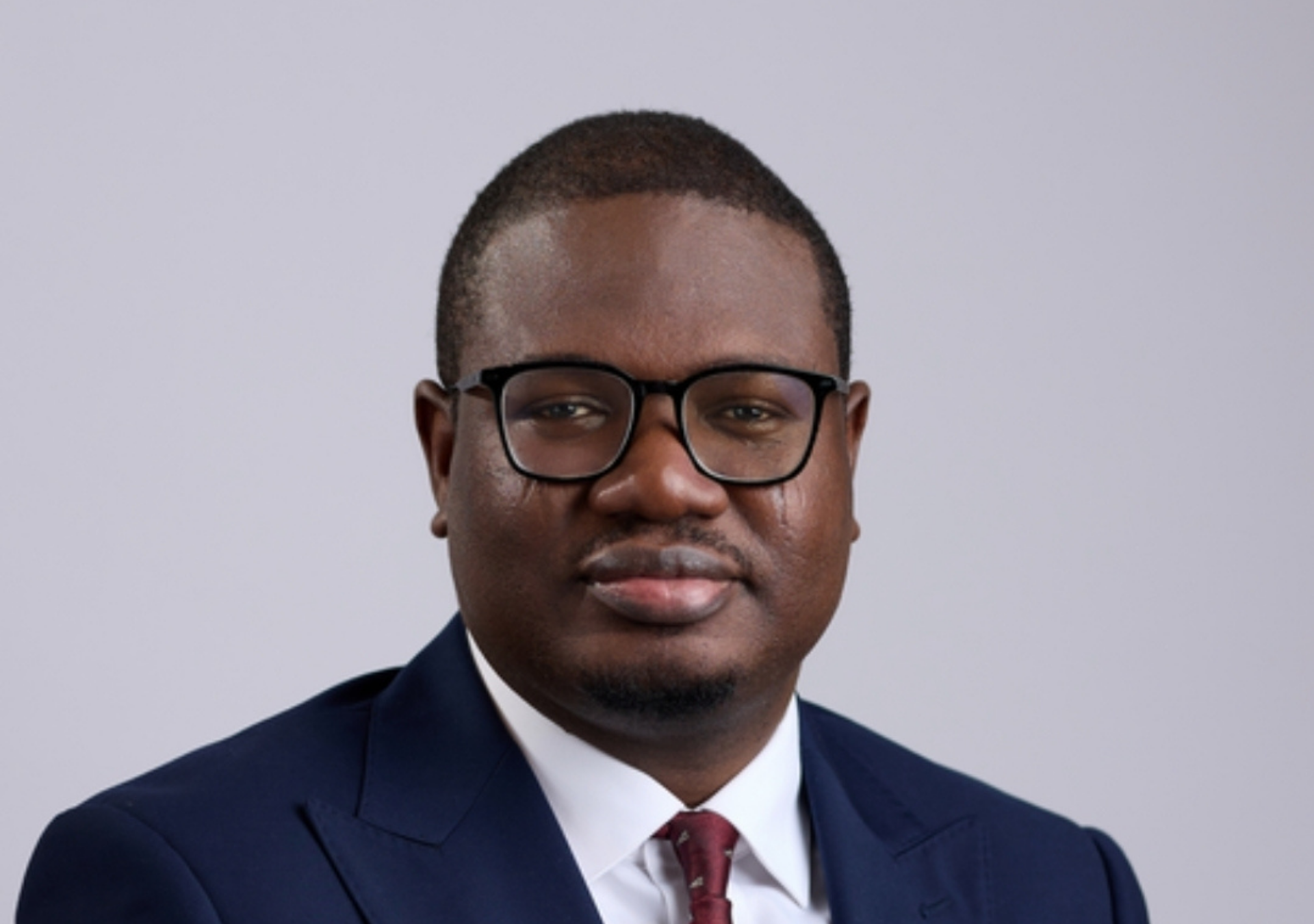
Razaq Ahmed is a Nigerian entrepreneur and the co-founder and CEO of Cowrywise, a financial technology company that helps people save and invest money. With a background in economics and finance, he has built a career around making savings and investment opportunities more accessible to Nigerians. His journey from working in finance to building a fintech company has made him a notable figure in Nigeria’s financial technology industry.
The Early Years of Razaq Ahmed
Razaq Ahmed was born and raised in Kano, Nigeria, where his parents lived and raised their children. Although his family had roots in southwestern Nigeria, Kano was where his parents got married and where Razaq and his siblings began their early education.
He spent the first 14 years of his life in Kano, growing up in a community where practical skills and learning a trade were considered important parts of a young person’s development. According to Ahmed, many children attended school while also learning a craft or engaging in manual work. For many families, completing secondary school and mastering a trade offered a practical route to earning a living.
Following the recommendation of one of his uncles, Ahmed began learning how to repair and maintain generators while attending Army Day Secondary School in Kano. His routine involved attending school with his classmates, changing out of his uniform after classes and heading to the workshop to continue learning the trade.
Although he performed well academically, Ahmed did not initially see university education as part of his future. At the time, he expected to become a generator mechanic. His plan was to complete his apprenticeship, establish his own workshop and eventually become successful through the trade. This expectation was influenced by the people around him, many of whom followed similar paths.
Even though Bayero University was located in Kano, Ahmed explained that the university community felt distant from the area where he lived. He rarely encountered university students or people whose careers were shaped by higher education. As a result, he had little exposure to the possibilities that a university degree could offer.
In 1999, when Ahmed was 14, an outbreak of communal violence in Kano changed the course of his family’s life. Concerned about their safety, his parents decided to relocate the family to Ogbomoso in southwestern Nigeria, their ancestral hometown, in search of a more secure environment.
The move marked a major transition for the family, as they had to adjust to a new environment and rebuild their lives. However, what began as an unexpected change would eventually expose Ahmed to opportunities that shaped his educational ambitions.
After arriving in Ogbomoso, the family stayed with extended relatives in the Isale area, not far from Ladoke Akintola University of Technology (LAUTECH). It was here that Ahmed began interacting more regularly with university students and young people preparing for admission.
Through conversations about lectures, examinations and life after graduation, he gradually became more familiar with university education and the possibilities it offered. He also interacted with a distant uncle who lectured at Obafemi Awolowo University (OAU), further broadening his perspective on higher education.
These experiences helped Ahmed see university as an attainable goal rather than a distant possibility. He came to understand that he, too, could pursue a degree and build a future beyond the trade he had initially envisioned for himself.
Ahmed subsequently sat for his examinations and performed exceptionally well in his West African School Certificate Examination, recording the best results in his school in Ogbomoso. However, his first attempt at gaining university admission did not go as planned.
He initially applied to the University of Ilorin but scored 20 points below the university’s reported cutoff mark of 235. The disappointment meant he had to reconsider his options and try again the following year.
Rather than abandoning his ambition, Ahmed applied to Obafemi Awolowo University in Ile-Ife, Osun State, where he gained admission to study Economics.
At OAU, Ahmed became involved in Students in Free Enterprise (SIFE), a student organisation focused on entrepreneurship and economic empowerment. His participation gave him opportunities to learn beyond the classroom and engage with ideas about business, enterprise and economic development.
His university experience marked a significant departure from the future he had imagined as a teenager in Kano. Instead of following the path towards becoming a generator mechanic, he was preparing for a career in the financial sector.
Ahmed graduated from Obafemi Awolowo University in 2007 with First Class Honours in Economics. His academic achievement laid the foundation for his entry into the world of finance and investment, beginning a professional journey that would eventually lead him to establish businesses of his own.
Building a Career in Finance
After graduating from Obafemi Awolowo University in 2007 with First Class Honours in Economics, Razaq Ahmed began his career in the financial sector. His first job was at Meristem Securities, where he started as a Research Analyst during his National Youth Service Corps (NYSC) year. This opportunity came through Saheed Bashiru, a senior schoolmate he had met during his final year at university.
At Meristem Securities, Ahmed was introduced to investment banking and financial market research. His responsibilities included studying the Nigerian stock market and analysing companies across different sectors, including banking, cement and fast-moving consumer goods. His work helped him understand how businesses performed, how investors evaluated opportunities and how financial information could guide investment decisions.
As he gained experience, Ahmed took on greater responsibilities and eventually became Head of the Research Unit. This gave him the opportunity to lead research activities and deepen his understanding of the Nigerian investment market.
In 2010, he left Meristem Securities to join Vetiva Capital Management as a Research Analyst. Although his time at the company lasted about four months, it added to his experience in financial research and investment analysis.
Later that year, Ahmed moved into the energy industry when he joined Shell Petroleum Development Company (SPDC) in December 2010 as a Business Economist. His work at Shell introduced him to a different side of business, where economic analysis played an important role in evaluating commercial opportunities and making decisions.
He later moved into the company’s gas commercial division, where he worked on the commercial aspects of gas-related activities. This experience broadened his professional knowledge beyond the stock market and exposed him to the financial and economic considerations involved in the energy sector.
While working at Shell, Ahmed continued pursuing the Chartered Financial Analyst (CFA) qualification, which he had started earlier. However, the demands of his new role affected his study schedule and delayed his completion of the programme until 2012. He also obtained the Energy Risk Professional (ERP) qualification, further strengthening his expertise in finance and energy risk management.
By the time he completed these professional qualifications, Ahmed had gained experience across investment research, financial analysis and the energy industry. These experiences helped him develop the skills and knowledge he would later apply to his own business ventures.
From SART Partners to Cowrywise

After completing his Chartered Financial Analyst (CFA) programme in 2012, Razaq Ahmed decided to establish his own business. Drawing from his experience in investment research and financial analysis, he founded SART Partners, an investment-management business focused on alternative assets and opportunities in sectors that were often overlooked by traditional investors.
Ahmed had observed that several businesses operating in Nigeria’s informal economy had the potential to attract investment but lacked the structures needed to make them accessible to investors. He believed that organising these businesses and creating suitable investment arrangements could benefit both business owners and people looking for investment opportunities.
SART Partners focused on areas such as oil and gas, commodities, real estate and agriculture. The business also had interests in fast-moving consumer goods (FMCG). Through different business operations, the company sought to organise investment opportunities in these sectors and make them available to interested investors.
In a 2020 interview with Nairametrics, Ahmed explained that the business initially served institutional investors and high-net-worth individuals. Its minimum investment was ₦1 million, making it difficult for people with smaller amounts of money to participate. Despite starting with approximately ₦20 million to ₦30 million, Sart Partners reportedly grew to a value of about ₦500 million.
However, as the business developed, Ahmed began noticing a gap in the market. People who heard about the investment opportunities wanted to participate but could not afford the minimum amount required. Some wanted to start with as little as ₦1,000, while others had ₦50,000 to invest.
This made him realise that although investment opportunities existed, many ordinary Nigerians could not easily access them through the traditional investment model. He began considering how technology could help make these services available to a much wider audience.
The idea eventually led to the creation of Cowrywise, a financial technology company Ahmed co-founded with Edward Popoola in 2017. The company was built around the idea of using technology to make saving and investing easier and more accessible to Nigerians.
Rather than limiting its services to wealthy individuals and large institutions, Cowrywise sought to help people save towards specific goals and access investment products with smaller amounts of money. Its automated savings feature allowed users to set saving schedules and build a regular savings habit without having to manage every deposit manually.
In a September 2017 interview with TechMoran, Ahmed explained that the platform was designed to make saving convenient and help people work towards their financial goals while going about their normal lives. At the time, the company was also exploring ways to make investment returns accessible to people regardless of how much they earned.
Cowrywise launched to the public in July 2017, following the completion of its regulatory requirements. The company initially relied on its own resources to build and develop the platform.
The business later joined Y Combinator’s Summer 2018 startup batch, giving it access to an international startup accelerator and a wider network within the technology industry. Cowrywise continued developing its digital savings and investment services, building on the original idea that inspired Ahmed to move beyond traditional investment management.
His experience with SART Partners had shown him that there was a market for investment opportunities among people who could not meet the entry requirements of conventional arrangements. Cowrywise became his attempt to address that problem by combining financial services with technology and making them accessible to a broader population.
Cowrywise Growth and Achievements
After Cowrywise launched in 2017, Razaq Ahmed and his co-founder, Edward Popoola, worked to grow the platform and make saving and investing easier for Nigerians. What began as a digital savings service gradually expanded to offer more investment options, helping users manage their money and work towards their financial goals.
One of the company’s major milestones came in 2018 when it joined Y Combinator’s Summer batch, a well-known startup accelerator in the United States. The programme gave Cowrywise an opportunity to connect with other founders, learn from experienced entrepreneurs and develop its business for a wider market. Being selected also brought international attention to the Nigerian fintech company.
Cowrywise continued to attract support as it expanded. In January 2021, the company announced that it had raised $3 million in a pre-Series A funding round led by Quona Capital, with participation from other investors. The funding was intended to support product development, strengthen its investment infrastructure, bring more fund managers onto the platform and expand its financial education efforts. The investment marked an important step in the company’s growth.
Another important part of Cowrywise’s development was expanding the range of services available to users. Beyond automated savings, the platform introduced access to mutual funds and other investment options, allowing customers to explore different ways of growing their money. Users could set savings schedules, work towards financial targets and choose investment products suited to their needs.
The company also operates within Nigeria’s regulated financial sector. Cowrywise Financial Technology Limited is licensed by the Securities and Exchange Commission (SEC) as a fund manager, an important part of its role in providing investment services to the public.
In 2025, Cowrywise expanded further into the Nigerian capital market through a partnership with Meristem to make stock trading accessible to more Nigerians. This development extended its offerings beyond savings and mutual funds, giving users another way to participate in the financial market through digital services.
Through these milestones, Ahmed has helped build Cowrywise into a recognised name in Nigeria’s fintech industry. Its growth reflects the company’s continued effort to make financial services more accessible and give everyday Nigerians more tools to save, invest and plan for their future.
Leadership, Legacy and Impact
Beyond his work at Cowrywise, Razaq Ahmed has continued to contribute to Nigeria’s financial industry through professional leadership and financial education. His experience in investment management and financial technology has positioned him to contribute to conversations about improving access to financial services and strengthening the country’s investment sector.
In March 2025, Ahmed became the fourth President of CFA Society Nigeria, an association of investment professionals that promotes ethical standards, professional development and excellence in the financial industry. His appointment followed an election by the society’s members, and his tenure runs from March 2025 to March 2027.
As president, Ahmed expressed his commitment to strengthening the society’s influence, maintaining professional standards and creating more opportunities for finance professionals. His vision also includes supporting talent development, encouraging policy engagement and building stronger connections within Nigeria’s investment community.
His contribution to financial inclusion is also reflected in his work at Cowrywise. By helping build a platform that allows people to save and explore investment opportunities digitally, Ahmed has contributed to efforts to make financial services more accessible beyond wealthy individuals and large institutions. The company’s growth reflects the demand for simpler ways to manage money and plan for the future.
Ahmed’s journey from learning a trade as a teenager in Kano to becoming a fintech entrepreneur and leader in Nigeria’s investment community shows how changing circumstances, education and professional experience can open new opportunities. Through Cowrywise and his work with CFA Society Nigeria, he continues to play a role in shaping conversations about the future of finance in Nigeria.






Leave a Reply